If you’re like most people, chances are that most of the movies you’ve watched in the past few years were streamed over a platform and displayed on a TV in your living room. Still, there is something undeniably appealing about watching a film the old-fashioned way, with dimmed lights, immersive sound, and no distractions.
Of course, many of us don’t have a dedicated space just for watching movies. Moreover, for many, an immersive movie night means going to the cinema. As the prices of quality home entertainment systems continue to drop, however, having a viewing sanctuary right at home has become far more appealing and accessible.
If you’ve got a spare bedroom gathering dust, it may be time for you to have your very own home theatre. With a few thoughtful upgrades, a modest-sized room can become a personal cinema that’s significantly better than your average night out.
It goes without saying that you need a big screen and a good sound system to start, but there’s still plenty of other stuff to think about. Check out these accessible bedroom to home theatre conversion tips to get you started.
[Photo by Jerry Linsen on Unsplash]
Design Tips for Turning a Spare Bedroom Into a Home Theatre
1. Use Art Prints to Improve Acoustics and Aesthetics
As you probably noticed, blank walls can lead to unpleasant echoes in a small room. Before you reach for pricey insulation foam panels, first try hanging some large format art posters with movie themes to diffuse some of the echoes. Fortunately, a home theatre doesn’t usually require the amount of “deadness” as a music studio so this low-commitment hack will often more than do the job. If that doesn’t do the trick, then you can start adding more conventional sound treatments and hide them with more works of art, if you wish.
2. Keep the Colour Palette Dark and Deep
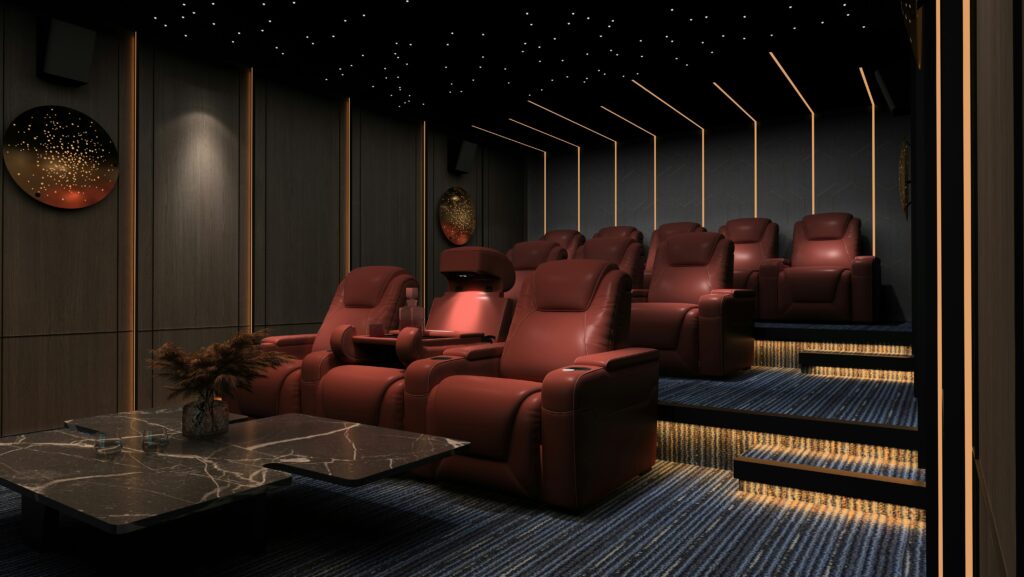
You've probably noticed that commercial cinemas are cloaked in dark, absorbent colours. This keeps the light off the screen from reflecting on the walls and floors, helping you keep your focus on the movie. Recreate this functionality at home with deep charcoals, navy blues, or forest greens for your walls and carpeting. If you plan on using a projector rather than a widescreen TV, these treatments will also be essential for reducing ambient light interference and maximising image clarity.
3. Look Into Some Light Control
If you want a truly cinematic feel, you’ll want to keep the room as dark as possible, especially if you plan to use a projector. Ditch the flimsy blinds in favour of blackout curtains or, better still, layered window treatments that can more effectively block out daylight and exterior lighting. If you want the option of ambient lighting, follow what commercial cinemas do and install some dimmable sconces or soft LED strips behind furniture to create a glow that doesn’t compete with your screen.
4. Invest in Some Nice, Thick Rugs
While wall treatments are generally more important, bare floors don’t do any favours for sound quality either. You can go with comprehensive carpeting but, quite often, a single thick rug will do the job of muffling footfalls and echoes. In any case, once you have a rug in the room, you should notice the dialogue become clearer and low notes less boomy.
5. Acoustic Wall Panels as Design Features
Full-fledged acoustic treatments can be expensive and they’re not really for everyone. For casual film buffs or those lucky enough to have a room with a good ambience, such treatments often aren’t necessary.
Still, if you’re willing to go a step further with soundproofing, avoid cheap foam acoustic panels and go for frame fabric-covered sound diffusers with timber or aluminium frames surrounding high-density insulation. You could buy these ready-made, but you can also create your own if you’re comfortable with some basic carpentry.
6. Choose Seating That Balances Comfort and Style
While stadium-style recliners might be a fun nod to commercial cinemas, they may not be the most space-efficient or practical choice for a spare bedroom. Indeed, you can do much better with comfier alternatives like low-profile loveseats or bean bags. A full-sized sofa is also a good alternative since it allows for maximum lounging and preserves the room’s original function as a place for guests to stay in.
7. Keep Wires Under Control
Home theatres can easily turn into a tangle of wires and trip hazards if you’re not careful. It’s a common enough issue that you can now easily find wire organisers and other similar solutions at many AV supply shops. Nevertheless, the old-school approach of building concealed shelves, purpose-built cabinets, and painted cable channels is still a great way to keep your AV components tidy.
8. Don’t Forget Your Creature Comforts
We still go to cinemas partly because the experience tends to be more multisensory than it is at home. The good news is that, with your own home theatre, you can go above and beyond the typical cinema experience. Consider adding a small linen cabinet holding pillows and plush blankets and top it with a scent diffuser loaded with popcorn-scented essential oils. Perhaps add a small fridge containing drinks and other snacks you enjoy when watching movies. As a big plus, some of those things also make your space even more functional as a spare room, especially if you kitted it out with a sofa.
Go Beyond the Commercial Cinema Experience
Sure, crystal-clear surround sound and a big screen add a lot to the experience but they’re not always the most important parts of an ideal home theatre. At least, not for everyone. If you’re lucky enough to have space for one, make the most of it by including the things that matter to you. Unless you’re already into that sort of thing, don’t fall into the endless trap of chasing the best gear. Instead, make a space that fully expresses your idea of comfort, creativity, and escape.