AD. Bad weather doesn’t need to dampen a family road trip. With a bit of care, some adapted driving style, and some planning, you can drive on muddier surfaces with confidence and with that added edge of excitement. Just let the rain make for a cosy, intimate feeling as you go to a new place together.

[Photo by Khoa Võ]
Preparing Your Vehicle for Rain
When you drive in the rain, make sure that you prepare your car so that you can be visible and safe. Check your tyres, brakes and lights when the weather is bad. With your car equipped for rain, you and your passengers are covered in case of any weather on your road trip.
Checking Tyres and Brakes
For proper traction, monitor the tyre tread (minimum 1.6 millimetres) and inflation every few months. Examine brakes for responsiveness and strange sound, and address problems early. These critical parts can be maintained by regular brake maintenance performed by a professional.
Windshield Wipers and Fluid
There are plenty of accidents you can avoid with clear visibility. Wipers on the windshield are your rain-friendly saviours. Look for tears in them or wrinkles that affect their performance. If they streak or squeak when running, replace them.
Use windshield cleaner that’s good for removing dirt and giving a clear view. You can also spray on anti-fog and anti-water repellent to clear the windshield. Make sure your fluid reservoir is full and monitor for leaks.
Headlights and Taillights
Headlights and taillights must be running to allow you to see and be seen by others. Check bulbs regularly for dimmers or failures. Wash the lenses to make them more light-emitting if they are dark or yellowed.
Upgrade to more bright halogen or LED bulbs to get better light. Check your headlights too, to make sure that they are mounted in a way that hits the road without blinding oncoming traffic. You should have dirt-free taillights and that are in full working order to keep drivers around you aware of what you are doing.
Planning Your Route with Weather in Mind
If you’re organising your family road trip, weather is key. Weather can make all the difference in your trip from what conditions to drive in, which roads to take, and what tools to use for real-time information.
Understanding Weather Patterns
Pre-planning: Before you get on the road, look for weather along your route. It depends on the time of year, and the weather could change quickly, both for your safety on the road and for the duration of your journey. Winter storms, for instance, may make roads icy, or the tropics may be plagued with rain and floods during some months.
Stay up to date by checking the local weather station or Internet weather website for current and forecast conditions.
Do a rough table or list of potential weather issues for each part of your route. This prepping also makes sure you’re stocked to weather major shifts.
Alternative Routes and Detours
If the weather is bad, there could be a road closure or poor visibility, and you’ll have to travel around. Map backup trails around flood zones or snowfall. Stay current and mobile with GPS apps and maps, and always make safe stops.
Technology and Apps for Weather Updates
When on a trip, you want to get the most out of technology and stay up-to-date on the weather. There are several apps that give you the latest weather, traffic and road conditions in real time.
Popular weather apps include:
- Weather Underground
- AccuWeather
- WeatherBug
Each contains precise predictions and warnings. Use traffic apps such as Waze or Google Maps to notify you when there is a delay and to recommend detours when conditions allow.
Set notifications for sudden weather alterations that could affect your driving. Now, you have the tools to make informed decisions for yourself and your family when you are out on the road.
[Photo by KIM JINHONG]
Safety Measures While Driving in the Rain
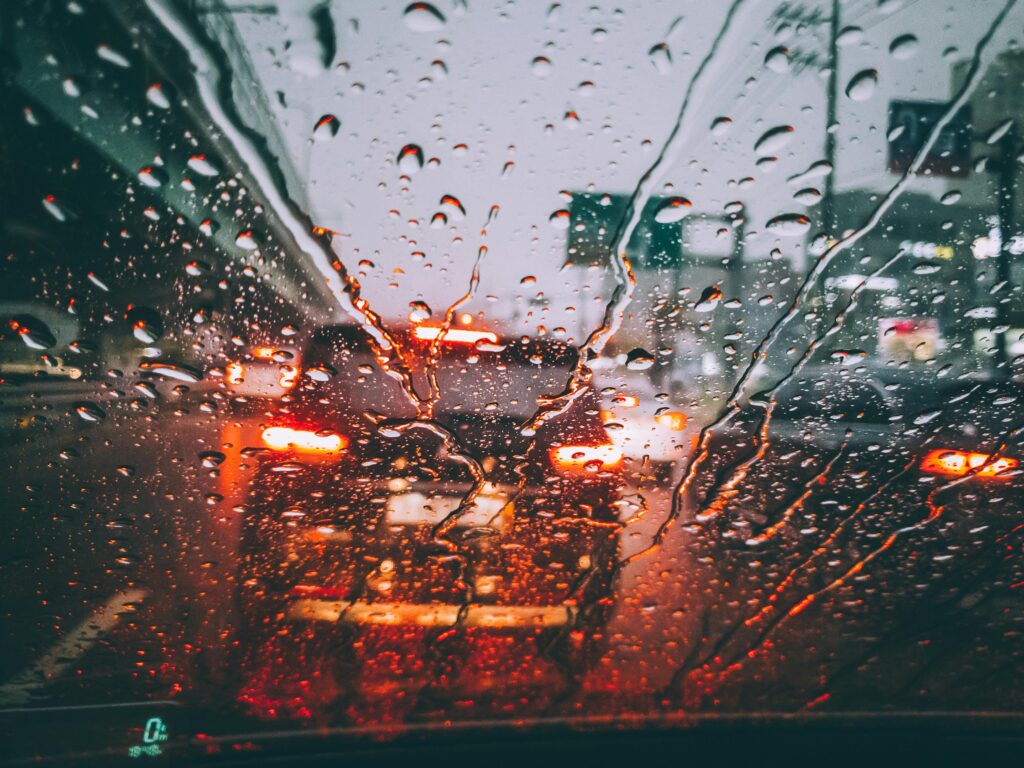
You must drive more carefully when it’s wet to protect your life and the lives of those with you and around you. It’s crucial to adjust your driving habits and follow essential tips for driving safely in heavy rain, like being prepared for potential hazards such as skidding, and taking necessary precautions when visibility decreases at night.
Adjusting Speed and Following Distance
When driving on rainy roads, slow down. Puddles make it twice as long for your vehicle to slow down. By taking it slower, you can respond better and faster. Follow at a safe distance — four to five seconds from the car in front of you. This extended time gives more room to stop properly, should necessary. Never forget that being safe when driving keeps accidents at bay.
Handling Skids and Hydroplaning
Don’t make sudden motions such as hard brakes or sudden turns if you don’t want to skid. When you start skidding, steer back the way you want. Hydroplaning happens when your tyres get separated from the road. If so, let off the gas and drive straight until the tyres become stable again.
Night Driving and Poor Visibility
A lot of rain reduces visibility, especially at night—use low beams for low glare and visibility. Verify your wipers are good. When it is very bad, slow down and perhaps stop safely until the weather clears up. Keeping your windshield clean both inside and out, too, ensures a clear view. Take your time, do not go without your sense of intuition; if you don’t feel safe, stay put until it’s better.
For more information on driving under heavy rain, remember these simple tips. Being ahead of the curve and prepared can save you a lot of hassle and make your trip a safer one, even in bad weather.
Comfort and Entertainment for a Rainy Drive
It’s hard, but also fun to drive in the rain. It is always nice to make everyone happy and entertained when it’s time to go. Dress well, do the activities that will keep the tone cool and the vibe cosy.
Comfortable Attire and Accessories
Wear warm clothes when travelling when it’s a wet day. Layer on layers (a hoodie, sweater, etc) that are breathable to changes in temperature. For quick stops outside, pack water-resistant jackets. With slip-on shoes, it is no trouble at all to move from the outdoors to the automobile.
Keep a blanket available for the colder months. There is no harm in carrying pillows or neck rests for longer distances. An extra pair of dry socks is also an assurance against unintended puddles. The small, deliberate fashion decisions can mean the difference between a comfortable, and a hassle-free ride.
Engaging Activities for Kids
Have your own road trip game set of portable games such as magnetic chess or card games. Play with your kids using colouring books, audiobooks, and a simple game of ‘I Spy’ to enjoy rainy days.
Music and Audiobooks for the Journey
A good playlist or a fun audiobook can be your soundtrack to the car journey. Make some mix of uplifting and chill music for the ride. Send a kid-friendly podcast to get into the conversation or explore something fun.
You can listen to audiobooks while you travel, and they’re great for long trips as you get to spend time in the stories. Sites such as Audible have plenty of them, from classic novels to the latest spy thrillers. Sharing the journey and talking about how the novel ended can be a great way to connect during the process.
Conclusion
It’s all in the preparation and adaptation to be able to stay safe when you’re on family road trips during the wet seasons. If you keep your car dry, adapt your driving, adjust your route to weather conditions and prepare your passengers for comfort, you can get the most out of your trip, rain or shine. Embrace the journey, be safe and enjoy the rain as an adventure in your travels.