AD. Property management in East London now carries more legal weight than it did a year ago. Since 1 May 2026, private tenancies in England run on a rolling basis, and landlords can no longer end one without a legal ground. Rents keep climbing too, with the ONS putting the London average at £2,338 a month in September 2026. A slip with a notice, a deposit or a licence can now cost real money, and rolling tenancies leave little room for error. This guide explains what a property manager does, what the service costs, which local rules apply, and how to judge an agent before you sign.

[Photo by Nitin Tulswani on Unsplash]
Key Takeaways
- Section 21 ended on 1 May 2026, so landlords now need a legal ground to regain possession.
- Full management costs 14.4% to 20.4% after VAT is added.
- At London’s average rent of £2,338, annual fees run from about £4,040 to £5,723.
- Councils add local rules, such as Waltham Forest’s £895 selective licence.
- Compare memberships, referencing, inspections and emergency cover before you appoint anyone.
What Does a Property Manager Do for a Landlord?
A property manager runs your rental day to day, from referencing tenants and collecting rent to arranging repairs and serving legal notices. Tenants contact the manager instead of you, which protects your time and keeps every record in one place.
Services differ between agents, so read the schedule rather than the headline. Most full management packages include:
- Marketing, viewings and tenant referencing
- Tenancy agreements, deposit protection and Right to Rent checks
- Monthly rent collection and arrears follow up
- Repairs, contractor visits and out of hours cover
- Inspections, safety certificates and legal notices
Demand for this support keeps growing. An NRLA poll of its landlord members, published in August 2026, found that 66% of private rentals in England and Wales are administered by a letting agent in some way.
Two thirds of private rentals now involve a letting agent.
Source: NRLA, August 2026
Quality varies, though. English Housing Survey data cited by the NRLA shows that 59% of private renters are satisfied with repairs when an agent handles them, against 73.5% when the landlord does.
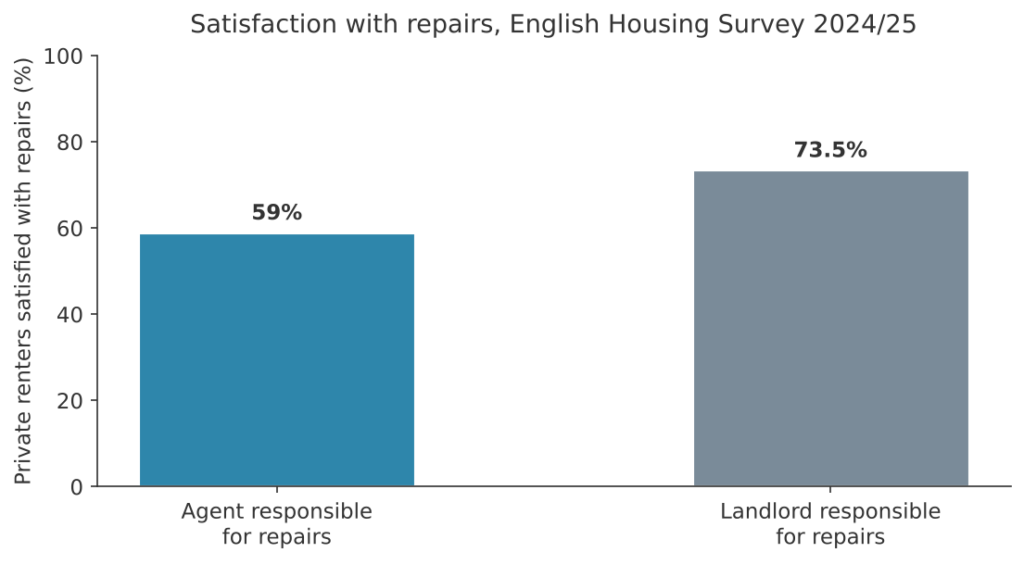
Figure 1: Satisfaction with repairs by who is responsible. Source: English Housing Survey 2024/25, cited by the NRLA.
| Pro tip: Ask each agent how repair requests are logged and tracked, and request a sample landlord statement. The satisfaction gap above makes this question worth asking. |
Your manager can only perform as well as the property allows, so preparing a property for new tenants before the first viewing sets a strong starting point.
How the 2026 Tenancy Reforms Changed Day to Day Management
The Renters’ Rights Act 2025 replaced fixed term agreements with rolling ones from 1 May 2026. The official overview for landlords confirms that existing assured shorthold tenancies became assured periodic tenancies and that Section 21 no fault evictions ended.
| Area | Current rule |
|---|---|
| Tenancy type | Rolling periodic tenancy with no end date in the agreement |
| Ending a tenancy | Section 8 notice with a legal ground, often four months’ notice |
| Rent arrears | A court only has to grant possession once tenants owe three months’ rent |
| Rent increases | One increase a year on Form 4A with two months’ notice |
| Advertising | Publish an asking price and refuse offers above it |
| Penalties | Rent repayment orders can now reach two years’ rent |
Each rule creates a paperwork trail that your manager must follow correctly. Landlords weighing student groups against working tenants should also read a guide to student lets or young professionals, which explains the student possession ground.
A short explainer from London operator Habitat Investments covers what the reforms mean for landlords and property management.
| [Video: "Renters’ Rights Act Explained: New Rules for Landlords & Tenants" https://www.youtube.com/watch?v=qgPl7Jn5SKE] |
The section from 06:11 covers how the reforms affect managers and landlords alike.
What Property Management Costs in East London
Full management fees range from 14.4% to 20.4% of monthly rent with VAT added, according to a July 2026 review of published agent fee schedules reported by Landlord Studio.
London rents make those percentages weigh heavily. ONS figures show an average London rent of £2,338 a month for September 2026, up 3.5% over twelve months. At that level, a 14.4% fee costs about £337 a month, while a 20.4% fee costs about £477.
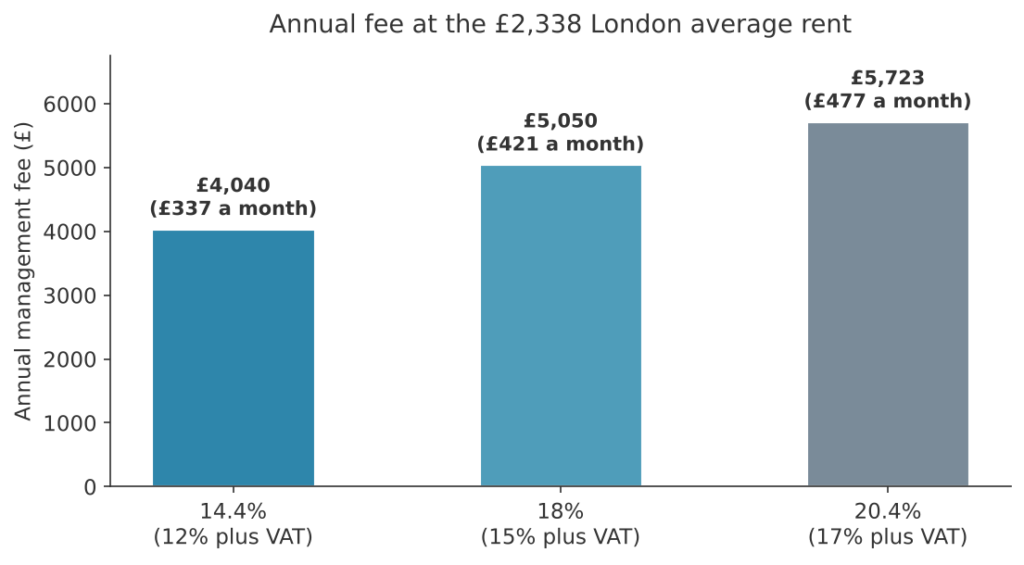
Figure 2: Annual management fee at the ONS London average rent. Fee levels are illustrations within the reported range.
Quoted percentages usually exclude VAT, so a headline 12% fee is 14.4% in practice. Fees between landlords and agents have no statutory cap, which leaves room to negotiate before you sign. Some large agents also charge up to £300 including VAT for serving a rent increase notice.
| Check before signing: Ask whether each quote includes VAT, and request the full fee schedule in writing so every extra charge is visible. |
Licensing and Safety Checks Across East London
East London boroughs add local licensing to national law. Waltham Forest launched a selective licensing scheme in May 2025 that runs until 30 April 2030, with a licence fee of £895.
The scheme covers private lets to an individual, a single family or two unrelated sharers, and it applies in every ward except Hatch Lane, Highams Park North and Endlebury. Newham and Tower Hamlets operate their own schemes, so confirm the current rules for your postcode with the council.
Safety duties apply in every borough. Landlords must arrange:
- An annual gas safety check on appliances, flues and fittings
- An electrical installation inspection at least every five years
- Working smoke alarms and carbon monoxide alarms where required
- An Energy Performance Certificate, valid for ten years
A manager who books these checks on a fixed schedule removes a common source of penalties. A guide to electrical repairs and safety guidelines explains what an inspection covers.
How to Compare Property Managers Before You Sign
A fair comparison needs the same five questions put to every agent:
- Membership and protection. Look for membership of a professional body such as ARLA Propertymark and proof of client money protection.
- Referencing. Ask how the agent checks income, credit history, identity and tenancy eligibility under Right to Rent rules.
- Inspections. Ask how often staff visit and whether you receive a written report with photographs.
- Repairs and emergencies. Ask who answers out of hours and how contractors are chosen and priced.
- Fees. Request the complete schedule and confirm which charges sit outside the management percentage.
What Good Management Looks Like in Practice
Oliver Jaques offers one example of these checks in action. The independent agency has served East and South East London since 1986, with offices at Surrey Quays and Bow Quarter, and it won Gold at the British Property Awards 2025 to 2026 for Letting Agent in E3.
Its property management team belongs to ARLA Propertymark and the Lettings and Management Guild. Landlords receive a condition report after six monthly inspections, tenants log repairs through the Fixflo system, and emergency support runs around the clock.
Referencing runs through Goodlord and combines open banking, credit checks, employment and landlord references, plus Right to Rent documents.
One landlord’s review shows why this depth matters. Peter M. describes a serious flood that started in the flat above his rental. The upstairs neighbour denied the leak, and the loss became a substantial insurance claim.
“Absolutely first class.”
Peter M., landlord, on property manager Erika’s handling of the claim. Source: Oliver Jaques website testimonials
Erika dealt with the tenant, filed the claim, advised his solicitors and helped collect the payout. Leaks and damp can escalate quickly, and a guide to moisture control during home renovations shows how to spot trouble early.
Questions Landlords Ask About Property Managers
1. How much does property management cost in East London?
Expect 14.4% to 20.4% for full management, with VAT included in both figures. On the £2,338 ONS average for London, that equals roughly £337 to £477 a month. Ask about set up, notice and compliance charges separately, because they can sit outside the percentage.
2. Can landlords still evict tenants after Section 21 ended?
Yes, but only with a legal ground. Landlords serve a Section 8 notice, often with four months’ notice, and apply to court if the tenant stays. Where tenants owe rent, courts must grant possession only after three months of arrears.
3. Do East London landlords need a licence?
It depends on the borough and property type. Waltham Forest requires a selective licence for most private lets through April 2030, costing £895. Neighbouring boroughs run separate schemes, so check your own council’s published requirements.
4. Is a property manager worth it for one flat?
A manager suits landlords who live far away or cannot handle repairs during working hours. Compare the annual fee with your time, your distance from the property and the penalties for mistakes, which can include repayment orders of up to two years’ rent.
5. What is the difference between tenant find and full management?
Tenant find covers marketing, viewings, referencing and tenancy set up, then hands the property back to you. Full management adds rent collection, repairs, inspections, compliance and legal notices throughout the tenancy. Inclusions vary by agency, so check each schedule.
Making Your Choice
Selecting an East London agent comes down to three questions. Does the agent understand the 2026 rules, can you see every cost in writing, and will someone answer when a pipe bursts? Rolling tenancies, local licences and rising rents reward landlords who ask before signing rather than after a problem appears.
Compare two or three agents against the checklist above, read each fee schedule closely, and choose the one whose process you can follow from first viewing to final check out.
References
- GOV.UK (MHCLG), Renters’ Rights Act: an overview for landlords, 2026: https://www.gov.uk/guidance/renters-rights-act-an-overview-for-landlords
- NRLA, Letting agent use hits two year high as rental rules grow more complex, 26 August 2026: https://www.nrla.org.uk/news/letting-agent-use-hits-two-year-high-as-rental-rules-grow-more-complex
- ONS, Private rent and house prices, UK: October 2026: https://www.ons.gov.uk/economy/inflationandpriceindices/bulletins/privaterentandhousepricesuk/october2026
- London Borough of Waltham Forest, Check if you need a selective licence for your property, 2026: https://www.walthamforest.gov.uk/housing/private-rented-property-licensing-prpl/choose-type-property-licence-you-need/check-if-you-need-selective-licence-your-property
- Landlord Studio, How Much Do Letting Agents Charge? UK Fees Explained, updated 2026: https://www.landlordstudio.com/uk-blog/letting-agents-fees
Fact Check: All statistics and data points in this article were verified against original sources as of 12 November 2026. Sources are listed in the References section.