When you begin shopping for a cello, it’s really easy to get sucked into reading specs, scrolling through online listings and comparing price tags. Photos give you a good idea of what is out there, but string instruments are hands-on, personal things. Two cellos made from the same block of wood can sound totally different when you actually run a bow across their strings.
Choosing the right cello is way more than just reading product descriptions online. There is no substitute for getting out there and trying an instrument yourself. You can hear the true tone of an instrument, feel how it fits in your hands, and decide if it’s an instrument that you will actually want to sit down and practice every day.

Why Should You Try a Cello Before You Purchase It?
Purchasing a cello is a major commitment, both for your wallet and for your musical journey. Because the workshop styles, the density of the wood, and the setups are so different, no two instruments play or respond the same way.
The sound and feel Explained
The sound and feel of cellos vary a lot, from the volume and tone to the feel of the strings on your fingers. When you play one, you can tell immediately how it responds to your touch.
Identifying setup or build problems
It’s much easier to spot physical red flags up close, such as awkward string height, sticking tuning pegs, or fine cracks that usually don’t show up in polished stock photos.
Matching your skill level and your taste
Whether you are brand new or preparing for orchestra auditions, trying a cello yourself will help you decide if its voice is right for the kind of music you actually want to play.
What to Look for in Examining a Cello
So the first time you sit down with a cello, take a moment to mentally run through a quick checklist of how it’s put together and how it works.
Clarity, richness, projection of sound
Play some open strings and basic scales. You're listening for a big, warm sound that fills the room but isn't boxy, muffled or harsh.
Body Construction & Overall Craft
Look at the seams, the finish, the joint where the neck meets the body. The varnish should be clean, and not sticky or rough in places. The wood should feel solid.
Bridge and fingerboard
Check that the bridge is straight and centred between the f-holes, and that the fingerboard has no weird grooves or lumps and feels smooth to the touch.
Tuning and quality of strings Stability
Press down slightly on the tuning pegs and fine tuners. They should slide easily, without slipping. Strings should speak clearly and hold tune.
Comfort of playing
Adjust the endpin to bring the cello in close. The top of the cello should rest comfortably on your chest, and your left hand should be able to reach the highest notes without hunching or stretching.
Choosing the Right Cello for Your Skill Level
Your level of progress in your player journey will help determine what type of instrument is suitable for you at this stage, and how long it will serve you as you evolve.
Student vs Intermediate vs Advanced Cellos
Beginner models are built to be abused and to speak easily. Intermediate cellos upgrade the wood quality for a better tone. Advanced instruments are hand-carved wood built for serious subtle dynamics.
Getting the right size
The cellos come in standard sizes (4/4, 3/4, 1/2, 1/4). The only way to be certain that your fingers will fall naturally on the notes and your knees will fit comfortably around the sides is to try one out in person.
Aligning with your goals
If you are joining a local community orchestra you will need an instrument that projects much better than one intended to be played in a quiet bedroom.
Balancing your budget with quality
Set a reasonable budget, but allow some wiggle room for essential extras like a good case, a decent bow, and good rosin.
Get input from your teacher
If you have lessons, bring your teacher along. They have trained ears that will catch tonal balance and subtle build quirks you might not.
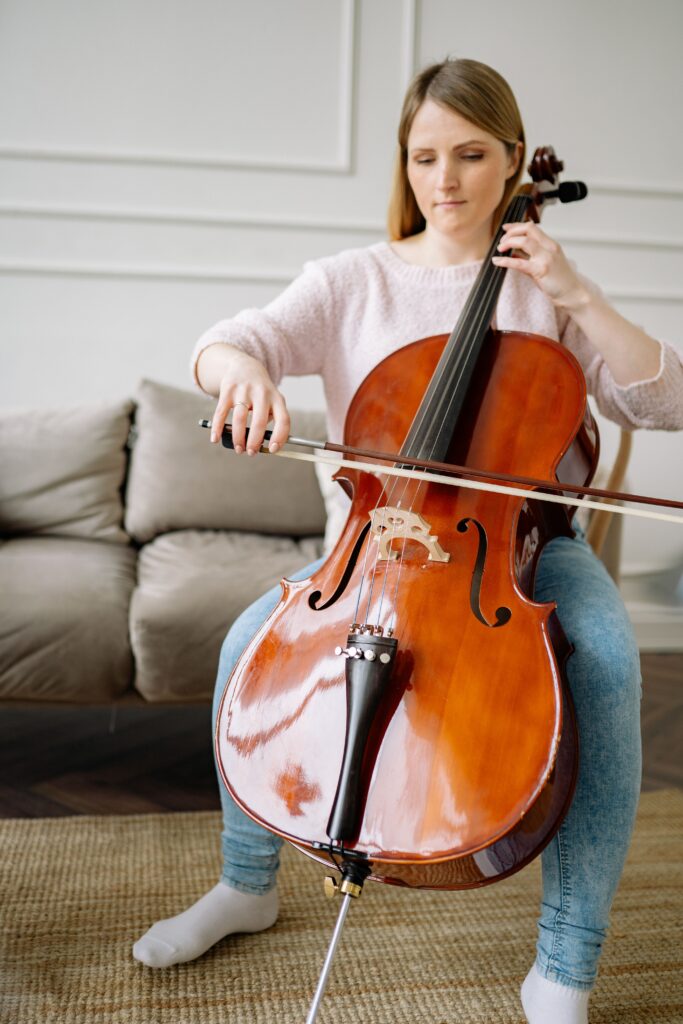
Advantages of Buying from a Local Music Shop
Shopping in a real store makes instrument hunting an interactive test drive, not a guessing game shipped in a box.
Side-by-side testing instruments
Playing three or four cellos side-by-side in the same room you get an immediate contrast in tone and playability.
Comparison of brands and prices
You can explore various tonewoods and setup styles at different price points to find what really feels like it’s worth the money.
Talk to knowledgeable staff
The local shop can answer practical questions about setup tweaks, string swaps and basic maintenance to keep your instrument healthy.
Accessories on the spot
You can test bow weights, you can try different endpin stoppers, you can double check that the cello actually fits cleanly inside the case you’re buying.
Finding local options
If you’ve been searching online for cellos for sale near me, then going into a real showroom gives you immediate access to test trials and reliable local repair help down the road.
What to Listen For When Trying Out Various Cellos
When trying out instruments, your ears are your best friend. Notice how the sound changes as you move around the instrument.
Warmth and depth
The C and G strings should have a satisfying, resonant growl, not a hollow, thin rattle.
4 string balance
As you travel the instrument up and down the volume and tone should flow smoothly without any sudden quiet spots or harsh spikes.
Smooth transitions between notes
You should be able to slide up and down the neck without any problem and each note should be clear and distinct.
How it reacts to your bow
Experiment with bow strokes short quick pops, long heavy pulls, soft passages, loud attacks to see how quickly the instrument responds.
Buzz-free playing
Listen for annoying vibrations, loose hardware or strings buzzing against the fingerboard.
Cello Buying Pitfalls
Avoid a few common pitfalls and you’ll save yourself a lot of headaches and wasted money later on.
Buy for looks only
A beautiful flame on the back wood is nice, but playability and tone are infinitely more important than a pretty varnish.
Choosing the wrong size
Attempting to play an oversized cello will result in hand fatigue and poor technique. Always choose what is right for your body today.
Cutting corners on setup checks
A lovely cello with a badly cut bridge or strings too high off the fingerboard will be a nightmare to play. “Don’t skimp on setup quality.”
The bow and accessories are not important
A cheap and flimsy bow will make even a top-of-the-line cello sound dull and awkward. Budget enough to buy a good bow.
Rushing the decision
Don’t feel pressured to buy on your first visit. Take your time, sleep on it, ask if the shop has short home trial periods.
Summary
Finding an instrument that you connect with is a very personal process. Research and online specs are a good starting point, but nothing beats playing the instrument yourself. Playing a cello in person gives you total confidence in its sound, setup and feel, ensuring you take home an instrument that feels totally natural in your hands and brings out your best playing for years to come.