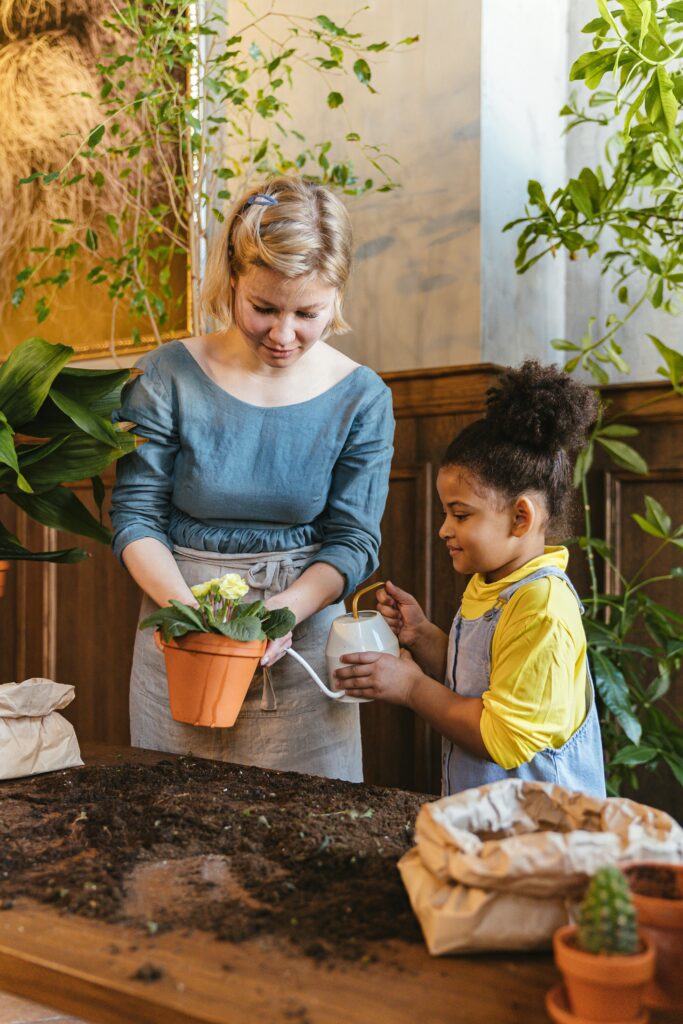
Children understand the world best when they can touch it, smell it and watch it change. Gardening gives you that chance without heavy language or gloomy forecasts. When a child waters a seed and later eats what it produces, climate change stops being an abstract idea and becomes part of everyday life. You don’t need expert knowledge or a large space to start. A few pots, a patch of soil or a shared school garden can open conversations about weather, seasons and care for the planet in a way that feels hopeful rather than overwhelming.
[Photo by Antoni Shkraba Studio]
Connecting Children With Nature
Gardening draws children outdoors and slows their attention in a world full of screens. When you garden together, they notice how dry soil cracks in summer or how heavy rain flattens young plants, which leads naturally to conversations about changing weather patterns. A child who watches bees visit flowers also starts to understand why pollinators matter to food production. Encourage children to keep a simple garden journal with drawings or short notes so they can track changes over time and build a personal connection with nature.
Linking Gardening to The Revised Climate Education Curriculum
Schools now place more emphasis on sustainability, and gardening supports that learning without adding pressure. You can link plant growth to science lessons on photosynthesis or geography topics such as rainfall and temperature. When pupils compare crops grown outside with those raised under a polytunnel, they see how controlled environments protect plants from extreme weather and extend growing seasons. Ask pupils to predict which plants will cope best with heat or heavy rain and then test those ideas in the garden.
School Garden for Climate Resilient Plants
A school garden works best when it reflects the climate children experience. Hardy plants like kale, chard and herbs show pupils that some crops tolerate tougher conditions than others. Growing these plants helps children understand adaptation rather than fear. They learn that choosing the right plant reduces water use and increases harvests, which feels rewarding when they cook or share the produce. Choose a small range of resilient crops and rotate them each year so children can compare results.
A Whole School Climate Action
Gardening becomes even more powerful when the whole school joins in. Composting lunch waste to feed garden beds shows children how everyday choices affect the environment. Parents and carers can help during planting days, which builds a sense of shared responsibility rather than blame. When pupils harvest food for a school meal or plant trees to improve shade, they see practical climate action at work. Celebrate these efforts publicly so children feel proud of their contribution.



Such a lovely idea using gardening to explain climate change. My son loves being outdoors, so this really resonated with me.
Corinne x
I think this is a very smart way to teach our kids about climate change and its impact on all of us. All kids love gardening, it is an amazing, practical and fun way in. Love the idea.
I like the concept of teaching children about climate change while gardening. It's a great method to teach them about this topic whilst learning about flowers and other things relating to gardening x
Lucy | http://www.lucymary.co.uk
I really love this concept. Climate change can feel like such an ethereal thing to adults, let alone kids. This is a great way to teach them about it.
I love this. I'm a big fan of gardening and nature, and climate change is something that is very important to me. This is a great way to make it important to the kiddos, too.
Getting little ones to notice how soil changes after a heavy rain really helps them grasp nature without feeling scared. It is way more effective to show them hardy plants than to just talk about weather.
This is such a great way to teach. In our school we have a vegetable garden and polytunnel. The children get to go and help with planting and composting.
This is such a great way to teach children about climate change as most kids really do love to help out in the garden. Teaching children about the different plants that can withstand harsher environments is a clever way to show how the plants can adapt and also good to demonstrate the fact they have to due to climate change.
My youngests school does gardening yearly, and it's so great to see them all getting into it. Climate change is such an important subject.
This is a brilliant idea! We’re homeschooling, and we’d love to do this with the kids too. Do you have any suggestions for crops we can plant?