AD. Sustainable living continues to evolve as technology and infrastructure align to support greener choices. Among the many eco-friendly innovations gaining traction, solar carports have emerged as a practical and forward-thinking solution. These structures are not only a creative way to generate renewable energy but also offer added functionality and protection for vehicles. More than just a shelter, a solar carport can redefine the way individuals and businesses manage space and resources.
[Photo by Kindel Media]
What is a Solar Carport?
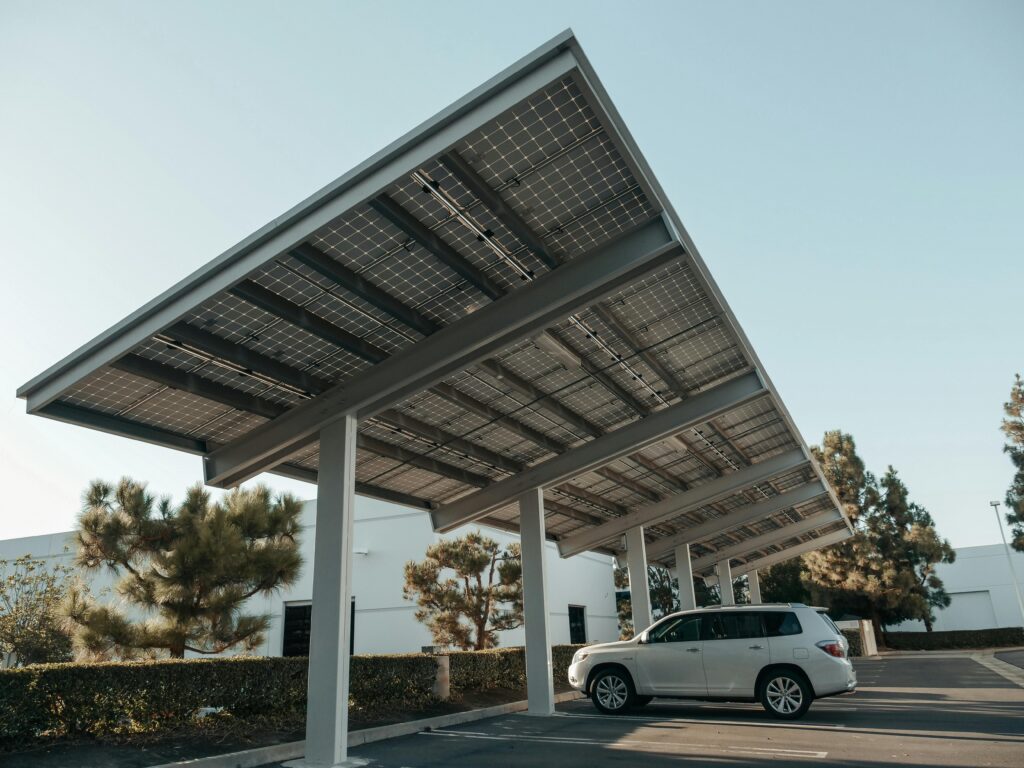
A solar carport is essentially a car shelter fitted with solar panels on its roof. Unlike rooftop solar systems that rely on existing building structures, carports are standalone and designed specifically to maximise solar collection while serving as covered parking. They are especially popular in commercial properties, office complexes and homes with limited roof space or sun exposure.
The primary benefit lies in their dual function. On one hand, they help reduce reliance on traditional energy sources by generating clean electricity. On the other, they offer protection for vehicles from sun, rain and environmental debris. For businesses, they can also be designed to include charging stations for electric vehicles, encouraging a low-emission transport culture among employees and visitors.
A Gateway to Broader Sustainable Infrastructure
Beyond their immediate purpose, solar carports often act as a stepping stone toward broader sustainability goals. For property developers and local authorities, installing these systems reflects a commitment to environmental responsibility. They also add long-term value by reducing energy costs and qualifying for green incentives or rebates in some regions.
For households, a solar carport can reduce energy bills, contribute excess power back to the grid and support a transition to electric mobility. These benefits go hand-in-hand with the increasing number of electric vehicles on the road and a greater demand for energy independence. With their modular design, solar carports can be scaled to fit small residential driveways or large commercial car parks, offering flexibility for many scenarios.
Supportive Infrastructure: Managing Surface Water
When integrating solar carports into a property, it is essential to think about the infrastructure surrounding them. Water runoff is one concern that often arises with additional paved surfaces. This is where a reliable drain channel becomes valuable.
Drain channels are designed to direct surface water away from carports, paths and other paved areas, reducing the risk of pooling and long-term water damage. When installed effectively, they not only preserve the structural integrity of the installation site but also contribute to environmental management by controlling stormwater flow. For eco-conscious projects, integrating proper drainage systems supports sustainability by preventing erosion and protecting nearby waterways from contamination.
Businesses and property owners alike can benefit from planning these drainage solutions alongside their solar installation, ensuring a cohesive approach to green development.
Sustainability in Mobility: Supporting Safe, Efficient Transport
While solar technology often takes centre stage in sustainability discussions, other components play a vital supporting role. Transportation, for example, is undergoing a parallel transformation, with safety, efficiency and sustainability intersecting in new ways.
High-quality motorcycle brake lines serve as a reminder that sustainable living is also about making safe, long-lasting choices. These critical components ensure that motorcycles operate with responsive and consistent braking power, reducing wear and extending the life of the vehicle. For businesses that incorporate motorcycles into their operations—such as delivery services or security patrols investing in durable and high-performing brake lines supports both safety and operational efficiency.
Moreover, a well-maintained vehicle reduces the likelihood of accidents or costly breakdowns, reinforcing a more responsible and sustainable approach to transportation. When combined with electric motorcycles or bikes, businesses can significantly lower their carbon footprint without compromising performance.
Visual Appeal and Functionality Combined
One of the overlooked aspects of solar carports is their contribution to the aesthetics and utility of outdoor spaces. Rather than adding unattractive industrial infrastructure, these systems can be designed to complement modern architecture and landscaping. Sleek metal frames, clean lines and integrated lighting can elevate the overall look of a property while serving an important functional purpose.