AD. Grief is a deeply personal and often overwhelming experience. It affects everyone differently and can take many forms, ranging from emotional pain and sadness to physical exhaustion. It’s a journey that no one wishes to embark upon, but it’s something that, unfortunately, everyone will face at some point in their lives. Losing a loved one is never easy, and the journey through grief can feel like navigating a vast, unpredictable sea. However, as daunting as it may seem, there are ways to find support, healing, and hope as you move through this challenging period. Many people find comfort in creating memorials, such as turning their loved one's ashes into glass or wearing ashes jewellery for men, as a way to honour their memory while navigating the difficult waves of loss.
[Photo by Serpent And The Swan on Unsplash]
Understanding the Waves of Grief
Grief is often likened to waves. Some days, the waves may be gentle, and you may feel like you are making progress. On other days, the waves can be fierce and relentless, pulling you under and leaving you gasping for air. This unpredictability is part of the grieving process, and it’s important to remember that there’s no right or wrong way to grieve. Your feelings, no matter how complex or confusing they may seem, are valid.
Many people experience grief in stages, with some of the most common being denial, anger, bargaining, depression, and acceptance. However, these stages are not linear, and they can often overlap. You may find yourself swinging between different emotions throughout the day or week. The important thing is to acknowledge your feelings and understand that it’s okay to feel how you do. Your grief is unique to you, and there is no set timeline for healing.
The Importance of Self-Compassion
When navigating grief, one of the most important things you can do for yourself is to practise self-compassion. It’s easy to feel guilty for feeling sad or even angry, especially when you think about the people who depend on you or the responsibilities you must continue to manage. However, it's crucial to allow yourself the space to grieve. Your emotional health needs attention and care, just as your physical health does.
Take time to reflect on your feelings without judgment. Allow yourself to cry, to feel angry, to be exhausted. Grief can be an incredibly lonely journey, but remember that you’re not alone in your experience. Many people have walked this path and found their way to healing, though it may take different forms for everyone.
Seeking Support Through the Journey
While grief is an internal experience, it doesn't have to be a solitary one. One of the most effective ways to support yourself during this time is by reaching out to others. Whether it’s a close friend, a family member, or a professional counsellor, sharing your feelings can be incredibly healing. Support groups, both in person and online, can also provide a sense of community and understanding. Being able to speak openly about your grief with others who have experienced similar pain can help you feel less isolated.
If speaking about your grief feels too difficult, there are other ways to express your emotions. Writing in a journal, creating artwork, or even talking to a therapist can help you process your feelings without the need for verbal expression. Sometimes, putting pen to paper or creating something tangible can help you make sense of your internal world.
Honouring Your Loved One
One of the most significant aspects of the grieving process is finding a way to honour the memory of your loved one. Creating a tribute or memorial can be a deeply personal way of keeping their spirit alive while helping you navigate the journey of loss. This could take many forms: planting a tree in their memory, holding a memorial service, or even creating something meaningful, like a piece of ashes jewellery for men.
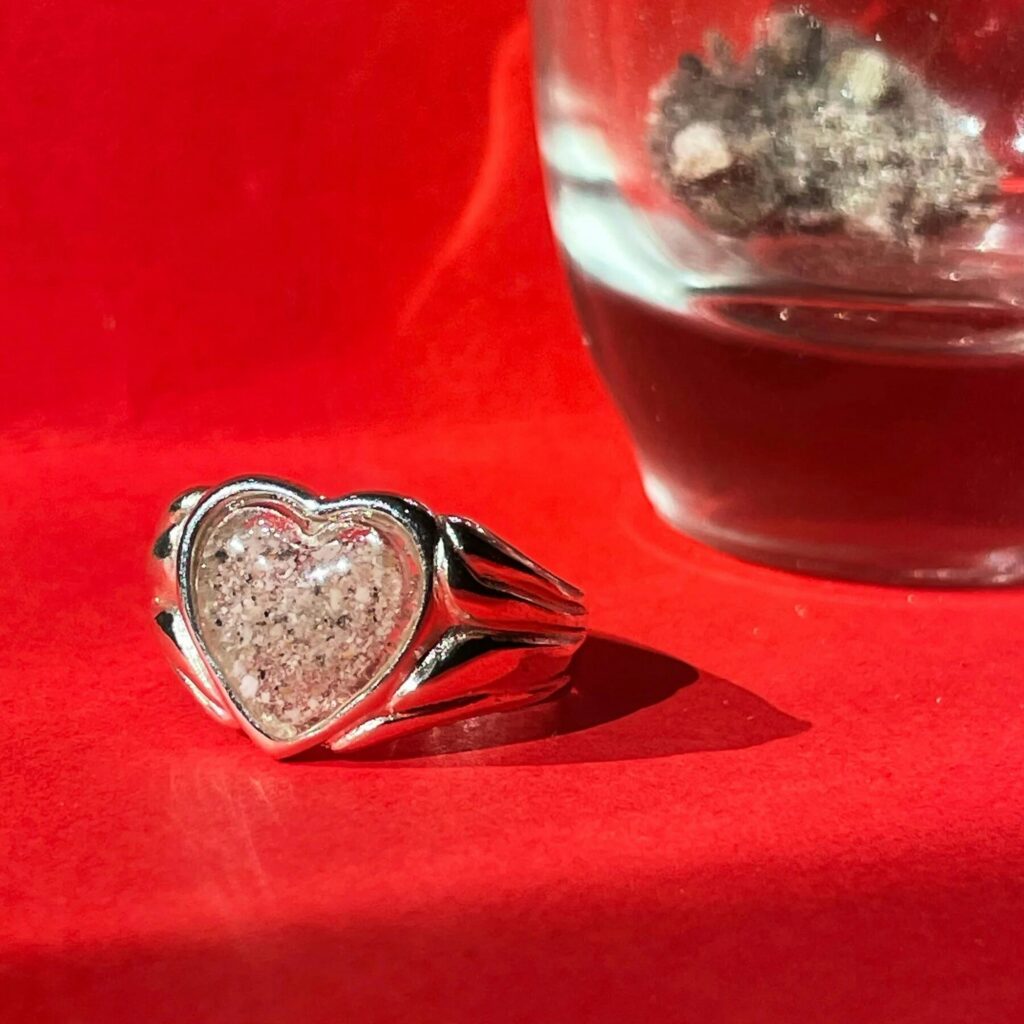
Ashes jewellery is a beautiful and subtle way to keep a loved one close. Incorporating your loved one's ashes into glass or jewellery allows you to wear a part of them with you every day. The process of turning ashes into glass or jewellery is a delicate and personal one, with the ashes being carefully handled to ensure that the final piece is a true reflection of your loved one’s memory.
Ashes into glass items are particularly poignant because the glass can be infused with the ashes of your loved one, creating a one-of-a-kind, enduring keepsake. This could be in the form of a pendant, bracelet, or ring—anything that allows you to carry their memory close to your heart. Similarly, ashes jewellery for men is an excellent option for those who prefer a more understated way to remember their loved ones. These pieces can be both elegant and meaningful, offering a subtle tribute that suits any style.
Creating these types of memorials allows you to feel connected to your loved one even after they’ve passed. It can provide comfort during moments of grief and serve as a reminder of the love and memories you shared.
Allowing Time for Healing
Healing from loss is not about "getting over" your loved one’s death. Instead, it’s about learning how to live with the absence and integrating that loss into your life. Time does not erase grief, but it does help to soften its intensity. As the waves of grief slowly ebb and flow, you may begin to notice that the waves come less frequently, and when they do arrive, they feel less overwhelming.
It’s essential to give yourself permission to heal at your own pace. Don’t rush the process or feel pressured to return to "normal" too quickly. Grief is not something that can be fixed, and there is no one-size-fits-all approach. If you feel like you need time away from work or other responsibilities, take it. If you need to take a break from socialising or certain routines, that’s okay too. Self-care during this time is about listening to your body and heart and doing what feels right for you.
Finding New Meaning and Purpose
As you move through the stages of grief, you may find that it’s not just about surviving, but about finding new meaning in life. It’s important to remember that while loss can shatter our world, it can also open the door to new possibilities. As you heal, you might find that you’re able to develop a new sense of purpose or explore new passions that honour your loved one’s memory.
Perhaps you start volunteering for a cause that was close to their heart, or you find solace in helping others who are grieving. Your loved one’s legacy can live on in ways you never imagined, and in the process, you may discover a deeper sense of peace.
Conclusion: Embracing the Journey
The journey through grief is not easy, but it is a path that, though painful, can lead to a deeper understanding of yourself, your loved one, and life itself. By being kind to yourself, seeking support, and finding ways to honour your loved one’s memory, you can begin to heal and embrace the journey ahead.
Grief may never truly go away, but with time, support, and self-compassion, you can learn to navigate the waves. And in doing so, you can transform your grief into something meaningful—whether it’s through the creation of ashes jewellery for men, memorials, or other tributes that keep their spirit close to you. Above all, remember that healing is a personal journey, and it’s one that you don’t have to take alone. Take it one step at a time, and allow yourself the grace to heal in your own way.