Turns out, the perfect treatment for one area of your face may not be the best choice for another area. Here is why the face and neck need special attention when it comes to choosing rejuvenation treatments. Most facelifts leave the neck untreated and just polish off the jawline. Even if you get Botox in the neck bands, it won't improve the quality of the skin.
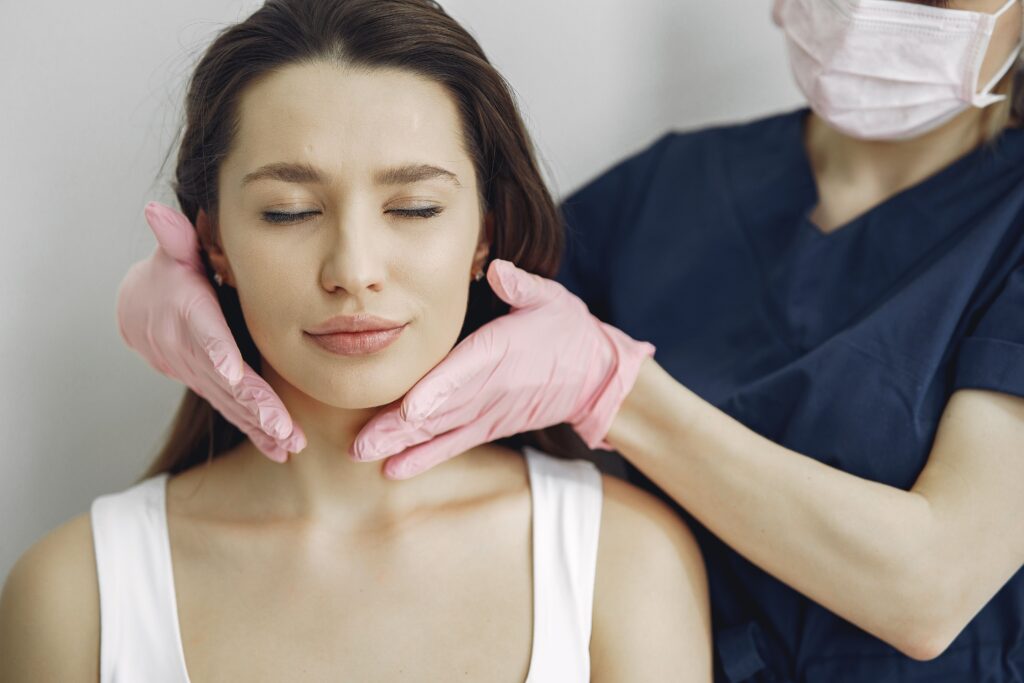
The Face And Neck Age As One Structure, Not Two
The lower face and the neck have a common deep tissue layer - the SMAS - and a common muscle sheet - the platysma - that extends from the jaw down to the chest. When we lift a face, we aren't simply lifting skin. We are repositioning this connected system. This is why a cheek that has been tightened in isolation looks weird sitting over a completely untouched neck. The jowl, in particular, sits right at the junction of these two zones. Jowls occur when fat and skin drop along the jawline. That drop is created by the same looseness that causes the banding and the fullness in the neck below.
This is why facial and neck procedures need to be thought of together, not selected a la carte. A surgeon who only assesses the lower face is missing the submental fullness and platysmal banding that will ruin her result. A patient who skimps on the "neck" portion of the lift because she only wanted to address her neck will invariably notice her jowls getting lonely and reconnecting with her face after isolation of the neck is performed.
Two Different Aging Processes Need Two Different Toolkits
Most patients say they came in because of "aging skin," but that catchall term lumps together two separate biologic processes, and confusing the treatment for one with the treatment for the other is where most "this didn't work!" frustration comes from.
The first process is skin-quality decline - the collagen loss, the thinning, the sun damage, the fine wrinkling, and the uneven pigment. For example, the Skin Cancer Foundation says up to 90% of the visible changes commonly attributed to skin aging are caused by sun exposure, which is a helpful reminder that much of what we call "aging" is just accumulated UV damage over the top of the natural aging timeline.
The second process is structural ptosis - the actual descent of fat pads, the stretching of skin, the banding of the platysma muscle, and the blunting of the angle between the chin and neck (the cervicomental angle). This is a mechanical problem, not a surface one.
Skin-quality decline will respond quite well to energy-based tightening, resurfacing, and topical treatments. Structural ptosis will not. No amount of radiofrequency or laser treatment will lift tissue that has truly dropped. This distinction is the single most useful filter for deciding what a person actually needs, and it's the first thing worth working through honestly in any consultation.
Non-Surgical Combinations Work Well For Mild-to-Moderate Laxity
For patients in the earlier stages of visible aging, where skin quality has declined but structural descent is still mild, a staged combination of non-surgical treatments can produce a genuinely improved jawline and neck without surgery.
A typical combination might include:
- Radiofrequency microneedling or micro-focused ultrasound to stimulate collagen and tighten the skin from within
- Neuromodulators (botulinum toxin) injected into the platysma bands - sometimes called a "Nefertiti lift" - to soften the vertical cords that show up in the neck
- Conservative filler or fat transfer in the cheek, chin, or jawline to restore lost volume rather than simply pulling skin tighter
The key word here is conservative. These treatments work by improving skin quality and softening muscle activity, not by repositioning tissue that has already dropped. They're appropriate when the degree of laxity is mild and the skin itself still has reasonable elasticity. Push these tools past their limits - using them on someone with true excess neck skin or pronounced jowling - and the results are underwhelming and short-lived, because the underlying structural problem was never addressed.
Skin quality assessment, including Fitzpatrick skin type, matters a lot here too. It determines candidacy for laser-based procedures and influences how predictable the healing and final result will be. This is one of several reasons a proper consultation, rather than a treatment menu, needs to be the starting point.
The Most Common Mistake: Treating One Area And Ignoring The Other
The most common specific complaint for patients seeking facelift after 50 is sagging midface and jowling. No one likes that pool of flesh that seems to rest on your shoulder as you try to get to sleep at night, and no one particularly warms to the idea of their jawline packing up its belongings and moving to their neck either.
The general process happening here is the loss of skin elasticity and fat volume. Less of these resources mean more skin hanging, and its self-imposed relocation to lower down your face. But the two particular problems of sagging midface and jowls arise because our facial architecture isn't a simple wrapping of skin over bone but an intricate web of interconnected fat pads.
In youth, these fat pads are voluminous enough to anchor everything in its right place, namely pointing straight outwards. But as they lose volume and begin to move downwards with gravity's persistence, the point of each fat pad starts to move lower on the face too.
The cheeks now have a dent where they previously projected out. Jowls form because the point of one of the fat pads in the cheek, the buccal fat pad slides downward in front of your jawline and creates a prominence in front of it.
When Surgery Becomes The Right Answer
Energy-based tightening and injectables are known to have a limited lifespan. In other words, they can likely make things better for a temporary period before you reach a point where you can't keep up the slack with them. No matter how much non-surgical stuff you do, you'll eventually need surgery if you live long enough. It's the how-long-is-a-piece-of-string part of this question, and you have to balance continued maintenance and expense against the inevitable. However, the wrinkle between the technologies is that newer machines deliver incrementally better and longer-lasting results, which may buy you some extra time and value.
That said, we don't often recommend dumping money into more non-surgical treatments if the look and feel of your neck are still really bothering you a month after your last course of radiofrequency or ultrasound (because everything's still in there at that point, you're just waiting to see the final result). For patients considering Sydney How to tighten neck skin with Dr John Flood, this is generally the point in the decision process where surgical consultation becomes the more useful next step. The "heat + time" equation that high-frequency focused ultrasound devices work on also doesn't do well at trying to cheat by whacking up the heat part to "add" more years of the time part. It'll just give you nasty burns, which is not how you want to get more time out of your skincare.
Why Combining The Facelift And Neck Lift In One Operation Makes Sense
When you have excess neck skin and pronounced jowls - which is quite common, if we're being honest - allowing the facelift and the neck lift to support each other by performing them in one session, I find, generally leads to a better-looking, more natural result than spacing them months apart.
Practically speaking, one recovery period is always better than two. Less downtime is less downtime, and the typical complaint of "I can't wear a turtleneck to this event!" is really minimal compared to the overarching goal of spending as little of your life in a surgical garment as possible, right? But more importantly, combining the two lets the same surgeon treat the jawline and the neck as beautiful negative space all in one go.
How that space should best be approached is pretty well-determined: not with a facelift incision that stops at the ear, telegraphing all too easily that there's an old neck behind it, and not with the distraction of an isolated, pulled-tight neck with jowls on either side. Ideally, not letting either the face or the neck do too much to compensate for the other.
Natural Results Depend On Volume, Not Just Lift
A result that is too tight doesn't automatically become a good result when enough time passes. Many years after facelifts, the person whose face appears the most aged isn't the one whose lift was too conservative; it's the one who didn't have enough volume. Too-tight lifting with insufficient volume replacement looks mask-like and artificial even when the scars are barely visible. This is why a facelift by any other name that doesn't take the midface into account will frequently need to be re-rejuvenated long before a well-done lift would have required a minor touch-up.
Fat grafting to restore midface volume can be performed at the same time as a facelift. The patient's own fat is used to plump up the midface, indirectly lifting the cheeks and the lower lids in the process. The surgeon who truly understands facial aging will be able to give the skin the right amount of tension. To do so, the rejuvenation plan must address not just redundant skin but also atrophy of the underlying tissues. The best results are obtained not by pulling the skin tight but by applying just enough gentle pull on the skin to allow less-tautly repaired musculature to hold the lift in place.
Adjunct Refinements And The Importance Of Timing
Submental liposuction, fractional laser resurfacing, and targeted neuromodulator injections for residual banding all have a place in refining a combined facelift and neck lift result. These adjuncts clean up fine details - skin texture, small pockets of fat, a stubborn remaining band - that a lift alone won't fully resolve.
Timing is where things go wrong if they're not planned carefully. Lasers and injectables need to be sequenced around the surgical healing timeline, not layered on at the same visit. Resurfacing too early on healing skin raises complication risk; neuromodulators injected too soon can interfere with how the muscle settles post-surgery. A well-sequenced plan treats these adjuncts as the finishing stage, not an afterthought squeezed in wherever it's convenient.
The Consultation Is Where The Plan Actually Gets Built
There is no single solution for all cases. Skin quality, the level of structural laxity, hyoid position, medical issues, and patient motivation all determine what combination is appropriate. Two patients with identical necks can have different treatment plans once those variables are factored in.
A natural result is a tailored result. This is based on an honest analysis of which problems are skin quality problems, and which are structural, and then tailoring the solution to the suitable tool, or appropriate timing if more than one issue is being treated. That construct is more important than any particular device or injectable because that is what actually prevents the inappropriate, incomplete result that so many patients are unhappy with.