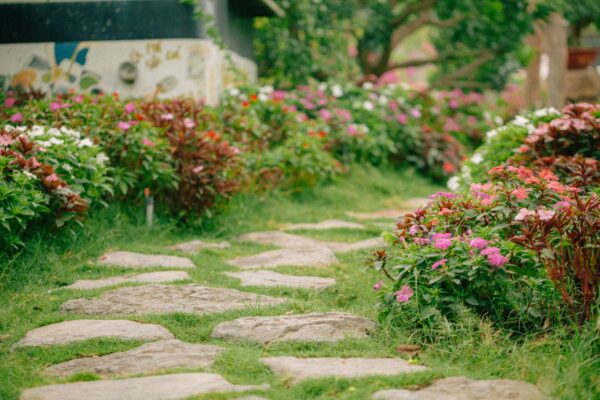
AD. Every garden surface looks good in a showroom photo. The honest test is what it looks like against your actual house, how it copes with your light and your slope, and whether it suits the way the garden gets used once the novelty wears off. Paving, decking, gravel and artificial grass each have a real place, and each has a downside the brochures tend to skip over. Working out which fits is less about taste than about being honest on all of that.
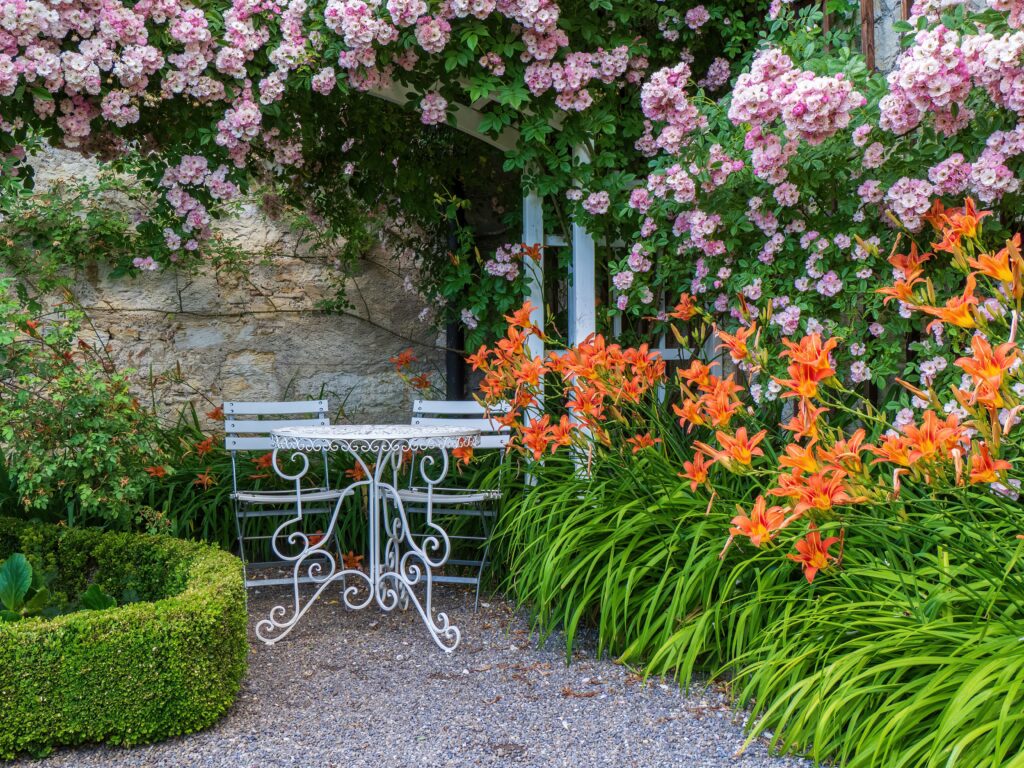
How to Choose a Garden Surface That Suits the House
Start With The House, Not The Garden
A surface that ignores the property it sits behind tends to look slightly off, even when it's well laid. A Victorian red-brick terrace, a stone cottage and a grey-rendered new-build are all asking for different things underfoot, and the easiest way to get it wrong is to choose a surface in isolation and bolt it on.
It usually reads better to take a cue from what's already there. Warm stone paving sits comfortably with older brick; cooler greys and crisp porcelain suit a contemporary extension; timber softens a hard, modern elevation. None of this is a rule so much as a way of stopping the garden and the house from looking like they were designed by two people who never spoke.
Paving
Paving is the hard-wearing, wipe-clean option, and the choice within it matters. Natural stone has variation and character but often needs sealing and a bit of upkeep. Porcelain is dense, low-maintenance and colour-stable, though it needs the right laying approach and isn't the cheapest. Concrete usually costs less and now imitates stone reasonably well. Whichever you pick, it needs a proper compacted sub-base and a slight fall for drainage, and nothing sold as paving is genuinely maintenance-free. Near a back door or on a route you'll use in the rain, check how slippery a finish gets when wet.
Decking
Decking earns its keep where paving struggles, particularly on sloping or raised ground, or where you want a level step straight out from the house. The timber-versus-composite decision is a real one and the two aren't interchangeable. Timber costs less up front but needs regular cleaning and treating. Composite costs more and skips most of the treating, though it isn't fit-and-forget either. Both can get slippery through a wet British winter, so an exposed, shaded deck is worth thinking twice about.
Gravel
Gravel is the cheap, flexible option, and it drains well, which makes it handy for awkward shapes and damp corners. The trade-offs are practical rather than aesthetic. It scatters onto paths and into the house, it's hard work for a buggy or a wheelchair, and it's no friend to bare feet. A weed-control fabric underneath helps, but it won't hold weeds back forever, and gravel needs proper edging or it slowly migrates across the whole garden.
Artificial Grass
Artificial grass suits households that want green underfoot without the mowing, and it copes with heavy use where real turf would turn to mud. It has limits worth knowing before committing. It still needs a prepared base, it doesn't drain on its own the way soil does, it can get noticeably hot in full sun, and it isn't the environmental choice it's sometimes presented as. Real turf brings the mowing and the muddy patches, but it stays cool and drains naturally. Neither is automatically right; it depends on who's using the garden and how often.
Mixing Surfaces And Sorting The Materials
Most gardens don't want a single surface across the whole plot. A paved area for the table, a path through planting, a softer patch for children to use, all defined with clean edging, tends to feel more considered than one material stretched wall to wall. Zoning like this also lets you put the durable, expensive surface only where it's needed.
Once the design and the measurements are settled, it's easier to price up and order the surface together with the things that go under and around it. A merchant carrying landscaping materials can usually cover the paving or decking alongside the sub-base, edging, jointing and any fabric in one order, which keeps quantities consistent and saves piecing a project together from several places. Work out how much you need from the measurements first, with a bit of allowance for cuts and waste, rather than guessing.
Match the surface to how the space is actually used and to what the house is quietly asking for, and the garden tends to settle into place. One last practical point: anything structural, a raised deck or a retaining wall holding back a slope, is worth handing to a professional, and check for underground services before any digging starts.