AD. You love sinking into your sofa at the end of a long day, but crumbs, spills, and pet hair can quickly spoil that comfort. Before you throw on another blanket to hide the mess, try mastering a few straightforward cleaning habits that keep cushions looking and smelling fresh. These tips pair well with occasional upholstery cleaning sessions when deeper grime sets in, giving you a sofa you’re never embarrassed to show off.

[Photo by Vecislavas Popa]
Routine Sofa Upkeep
Daily living shows up quickly on fabric, yet consistent maintenance keeps the couch photo-ready and long-lasting without heroic weekend scrubbing sessions or expensive emergency visits.
Vacuum Like a Pro
Grab the upholstery nozzle twice a week, working left to right so crumbs, pet hair, and grit never grind into fibers and dull the original color.
Rotate and Fluff Cushions
Switch positions monthly to even out pressure spots; vigorous fluffing restores loft, prevents sagging, and maintains that inviting “sink-in” comfort guests notice immediately.
Spot-Test New Products
Before spritzing cleaners, check an inconspicuous seam. A quick swipe confirms colorfastness and saves you from learning the hard way that dye might bleed.
Upgrade Your Toolkit
Handheld extractors such as the Little Green recommended by Good Housekeeping pull embedded soil and leave minimal moisture, making routine refreshes faster and more effective.
Adopting these habits means small messes stay small, fabric fibers stay resilient, and professional deep cleans become occasional tune-ups rather than emergency overhauls.
Tackle Spills Fast
Accidents happen in real time, so the response must be equally immediate; rapid action prevents permanent staining and keeps family movie night drama free.
- Blot, Never Rub: Press a clean white cloth straight down, lifting liquid vertically so pigments cannot spread sideways through capillary action along the weave.
- Create a Barrier: Slide a folded towel under loose cushions to stop moisture from soaking stuffing, which can harbor odor-causing bacteria later.
- Mix a Quick Solution: Combine warm water with a few drops of clear dish soap, dab gently, then blot dry to neutralize most fresh food spills.
- Finish With Cool Air: Aim a fan at the damp spot for thirty minutes; speed drying curbs watermark rings and discourages mildew growth.
Follow these steps within the first five minutes of any mishap and even red wine, coffee, or puppy puddles lose their power to haunt upholstery permanently.
Refresh Cloth Upholstery
Fabric sofas labeled “W” or “S-W” reward periodic overall cleaning, erasing built-up body oils, airborne grime, and stubborn shadows that routine vacuuming leaves behind.
Identify the Fabric Code
Check the hidden tag; it directs whether water-based, solvent-based, or dry brushing is safest, mirroring the guidelines in the Home Depot microfiber cleaning tutorial.
Create a Gentle Solution
For “W” fabrics, dissolve one tablespoon of mild transparent dish soap in a quart of warm water, load into a spray bottle, and shake lightly.
Work in Sections
Mist a small panel, agitate with a soft brush until suds appear, then blot with a microfiber cloth, ensuring no area is oversaturated or ignored.
Rinse and Nap
Wipe away residue using a damp cloth, allow complete drying, then restore texture by brushing in circular motions to raise the cloth’s original nap.
Execute this refresh every three months and dull, flattened upholstery returns to vibrant color and soft hand, making the whole room feel newly furnished.
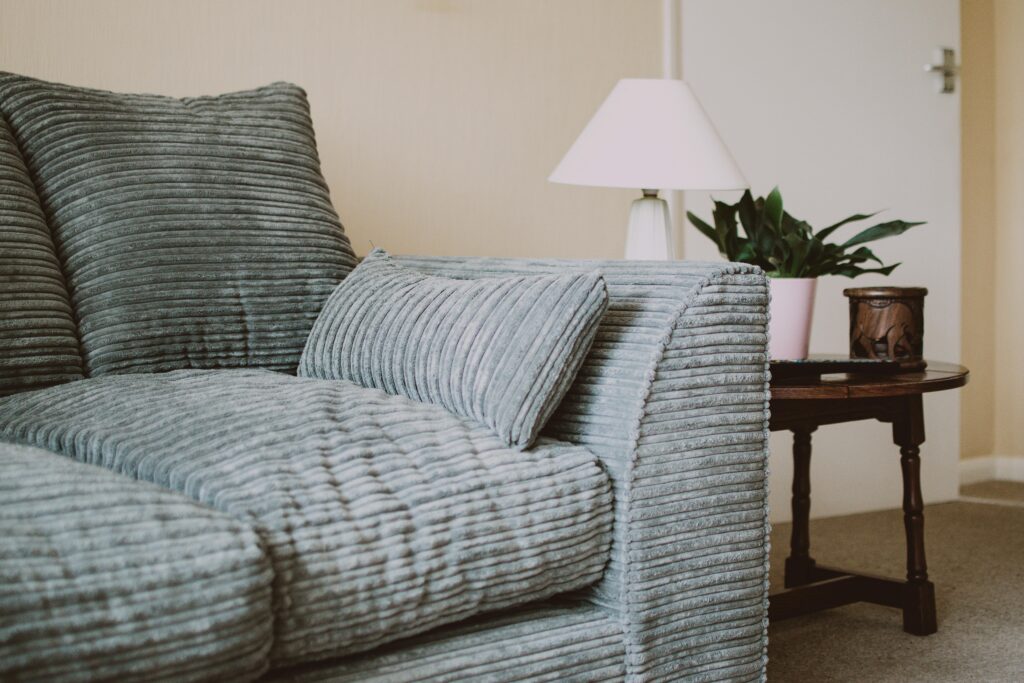
[Photo by Lisa from Pexels]
Microfiber Couch Care
Microfiber resists liquid but attracts oils, so targeted techniques preserve its suede-like finish without leaving stiff water rings or dark greasy patches.
Use Isopropyl Alcohol
Fill a spray bottle with 70 percent alcohol, lightly mist an armrest, then scrub with a white sponge; alcohol evaporates quickly, preventing moisture damage.
Tackle Grease Spots
Cornstarch sprinkled generously over oily marks absorbs residue; vacuum after twenty minutes, repeating if necessary until the area blends seamlessly again.
Refluff the Fibers
Once dry, brush gently with a clean nylon scrub brush to restore the velvety texture that gives microfiber its prized, pet-friendly character.
Master these steps and your microfiber couch delivers years of cozy seating free from shiny blotches, sticky arms, or the tell-tale crunch of residue.
Deep Clean Sectionals
Large multi-piece sectionals invite sprawling comfort but also hide crumbs in every crevice; a seasonal deep clean restores freshness and revives color uniformly.
- Divide and Conquer: Separate each segment to expose hidden connectors, then vacuum all sides, eliminating dust bunnies lodged where backs meet walls.
- Pre-Treat Traffic Zones: Spray enzyme cleaner along chaise lounges and favorite corners where elbows and heads rest, letting it dwell for ten minutes.
- Hot Water Extraction: Rent or hire a truck-mounted unit for thorough steam rinse and powerful suction that lifts embedded soil without oversoaking cushions.
- Protect and Reassemble: After fabric dries, mist with fabric protector, realign connectors, and push pieces together, ensuring consistent pile direction for a polished look.
Commit to this deep regimen twice a year and even massive family sectionals remain bright, odor-free, and ready for binge-watch marathons or holiday guests.
Eco-Friendly Cleaning Solutions
Chemical sensitivity, curious toddlers, and furry companions make plant-based cleansers a smart swap, delivering sanitation without harsh fumes or lingering residues.
- DIY Citrus Degreaser: Soak citrus peels in white vinegar for two weeks, strain, dilute one-to-one with water, and spritz to cut oily grime naturally.
- Baking Soda Deodorizer: Lightly dust cushions, wait overnight, then vacuum; the powder absorbs stale odors and moisture without altering fabric chemistry.
- Castile Soap Suds: A teaspoon of liquid castile soap in warm water creates gentle foam safe for delicate textiles yet tough on everyday dirt.
- Hydrogen Peroxide Boost: For light fabrics, combine equal peroxide and water plus a drop of soap, blotting gently to lift organic stains while remaining oxygen-powered and bleach-free.
These green recipes minimize environmental impact, cost pennies, and leave living areas smelling subtly fresh rather than aggressively perfumed or chemically masked.
Remove Sofa Odors
Smells from pets, snacks, and humid weather can linger invisibly; neutralizing them restores a welcoming atmosphere rather than merely disguising problems with fragrance.
Target the Source
First vacuum thoroughly, including beneath cushions, because stray popcorn kernels and pet fur act as ongoing odor reservoirs if left undiscovered.
Enzyme Eliminators
Spray a bio-enzymatic formula on areas hit by milk, urine, or sweat; friendly bacteria digest the odor-causing proteins instead of masking them.
Activated Charcoal Packs
Slip breathable pouches behind cushions; porous charcoal continuously adsorbs moisture and smells, offering a passive solution between active cleaning sessions.
Sunshine Therapy
On a dry morning, place detachable cushions outside for two hours; ultraviolet rays naturally kill microbes and fresh air whisks away musty buildup.
Combine these strategies and the couch greets every guest with clean neutrality, never hinting at last week’s pizza night or the family’s beloved Labrador.

[Photo by Chait Goli]
Steam Cleaner Safety
Pressurized steam annihilates germs, yet misused devices can warp fabric, release dye, or cause scalds; understanding boundaries keeps both upholstery and hands intact.
Check Material Codes
Only fabrics tagged “W” or “WS” tolerate steam; leather, velvet, and silk belong on the no-steam list cited by professional cleaner advisories and consumer forums.
Test Temperature and Distance
Begin with the lowest setting, holding the nozzle two inches away, moving constantly to prevent moisture pooling that might saturate padding underneath.
Use Distilled Water
Mineral-free water prevents nozzle clogging and white residue streaks; periodic descaling extends appliance life while maintaining consistent, safe steam output.
Respect these precautions and a steam session becomes a quick sanitizing boost rather than an irreversible upholstery mishap or painful kitchen-level burn.
Protective Fabric Sprays
An invisible shield repels spills so cleanup becomes a casual blot rather than a frantic scramble, extending the life and appearance of every seating surface.
- Select the Right Formula: Choose water-based protectants safe for indoor fabrics; solvent aerosols can darken natural fibers or leave unpleasant odors lingering.
- Apply Evenly: Hold the can eight inches away, sweeping methodically to coat all sides of each cushion, ensuring complete barrier coverage without oversaturation.
- Allow Adequate Curing: Let treated pieces dry for at least twenty-four hours before use; full polymerization guarantees the promised liquid-beading performance.
- Schedule Reapplications: High-traffic sofas need a fresh coat every six months, while guest room chairs may last a full year before retreatment.
Follow the label on reputable products—many homeowners favor formulas similar to those offered by upholstery specialists—to keep fabrics ready for whatever life spills next.
Sofa Sense
You’ve learned to nurture every couch material, curb stains swiftly, and purge odors without harsh chemicals. Apply these methods regularly, verify manufacturer labels before experimenting, and ventilate rooms after cleaning. With discipline and mindful product choices, you sustain comfort, hygiene, and the longevity of your living-room centerpiece for years ahead.


I am in deep cleaning mode so this is right up my street!
Rosie