AD. There's a certain kind of garden disappointment that most parents will recognise. You spend a weekend and a decent chunk of money setting things up, and within a fortnight the children are back indoors asking for the tablet. It's rarely because the garden isn't nice enough. More often than not it's because the space hasn't been planned with the way children actually play in mind. The good news is that fixing it costs far less than you'd think, and the changes that make the biggest difference tend to be the cheapest ones.
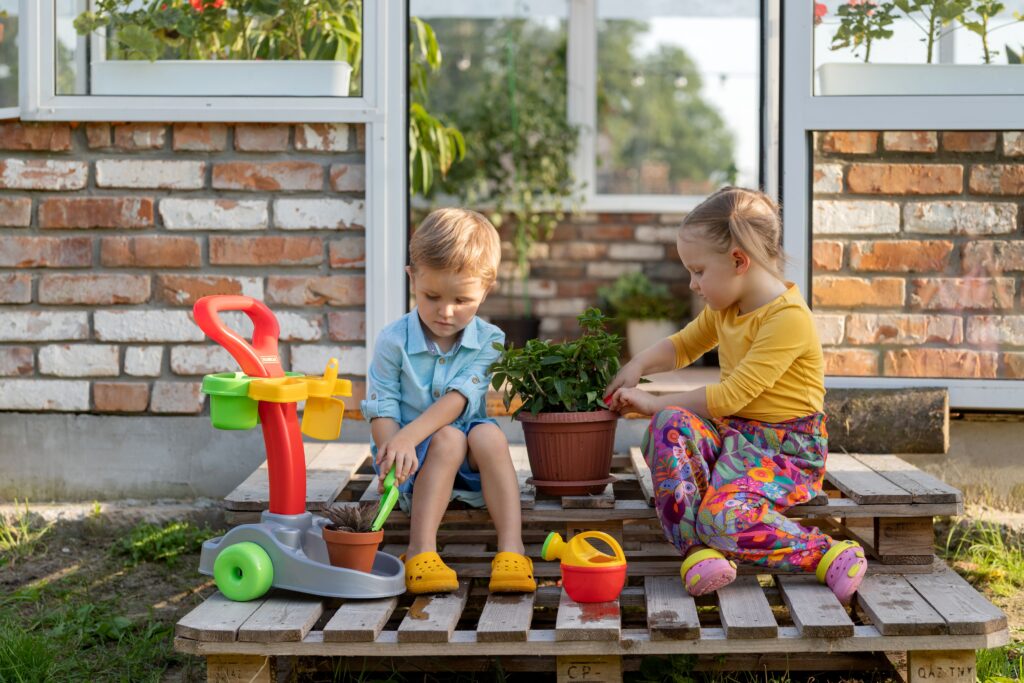
How To Create A Family-Friendly Play Space on Any Budget
Think in Zones, Not Purchases
It's tempting to start with the big item. A climbing frame, a trampoline, something that feels like a proper investment. But buying first and planning afterwards is how gardens end up cluttered and awkward to use.
Try working backwards instead. Most family gardens work beautifully with three distinct areas.
An active zone for climbing, swinging and running about. This belongs at the far end, away from the house, where there's a bit more room and the noise feels less immediate.
A messy zone for water play, sand, mud kitchens and painting. Keep this near an outdoor tap and on something you can hose down afterwards.
A quiet zone for dens, reading and hiding away. This one costs almost nothing, just a corner behind some planting, and it ends up being used far more than anyone expects.
Leave Room Around The Big Stuff
If you take one thing from this, make it this: the space around outdoor play equipment matters just as much as the equipment itself.
Children run, chase and invent games around a climbing frame far more than they climb on it. A modest frame with clear ground on all sides will get used constantly. A huge one wedged between two fences won't.
A sensible rule of thumb is that no single item should swallow more than a third of your usable lawn.
It's worth thinking a few years ahead too. Equipment with removable bars or swappable attachments grows with your children, while something designed for one specific age tends to be ignored the moment they outgrow it.
The Cheap Things Get Played With Most
This surprises people, but it holds true in almost every garden.
A crate of logs, planks, buckets and old pots will generate more hours of play than something costing hundreds. Children love inventing, and open-ended bits and pieces let them do exactly that.
The same goes for outdoor toys. Balls, chalk, water pistols, a paddling pool, a bug-hunting kit. None of it costs much, all of it stores easily, and it's what gets reached for on an ordinary Tuesday after school.
Try rotating them. Put half away for a few weeks and bring them back out later. Children greet them like something brand new, and you haven't spent a penny.
Sort The Storage Out Early
This is the bit that gets skipped, and it's the reason so many gardens end up looking chaotic.
Without somewhere to put things, everything lives on the grass. The lawn suffers, the garden looks messy, and nobody enjoys being out there.
A storage bench, a slim shed or a weatherproof box against the wall solves it. Choose something your children can open and close themselves, and tidying up gradually becomes their job rather than yours.
Make Peace With The Mud
Grass and children don't get on well in a British winter. By February, the patch under the swing is usually gone.
Bark chips work well under climbing equipment, look natural and soften falls. Artificial grass solves the mud entirely, though it gets hot in summer and struggles to drain in heavy rain. Or you simply accept it, keep proper lawn in one part of the garden, and give up on the rest.
Most families land somewhere between all three, and that's absolutely fine.
Keep It Feeling Like A Garden
A space can be brilliant for children and still be somewhere you want to sit on a summer evening.
Wooden equipment weathers in far better than bright plastic. Planting in front of a frame hides a surprising amount. Tough shrubs and grasses around the edges will survive the odd football. And keeping your garden lighting separate from the play area means the whole thing feels calmer once everyone's gone to bed.
Don't Finish It In One Go
Possibly the most useful advice of all. Children change quickly, and a garden built complete in a single weekend dates just as fast.
Start small. Add things gradually. Leave space for whatever comes next.
Get the zones right, keep room to move, choose simple over expensive, and sort the storage, and you'll have a garden the whole family uses right through the year.