AD. When it comes to installing a new bathroom floor, you can't just choose any old material. You want something that fits the style of the room, but it also needs to cope with water, humidity and everyday use. Unlike bedrooms or living rooms, it's not just about looks alone. There are plenty of options now that do both. You can still get the warm look of wood, the clean finish of stone or something a little more decorative without sacrificing performance. If you're planning to update your bathroom, here are a few things worth thinking about before you decide.
Think About The Overall Look
Your flooring can play a big role in how your bathroom feels, so it's worth thinking about the style you want before choosing a material.
For a softer, more natural bathroom, wood-effect flooring works really well with warm neutrals, textured walls and simple furniture. If you prefer something more modern, stone-effect or large-format flooring can help create a more seamless look.
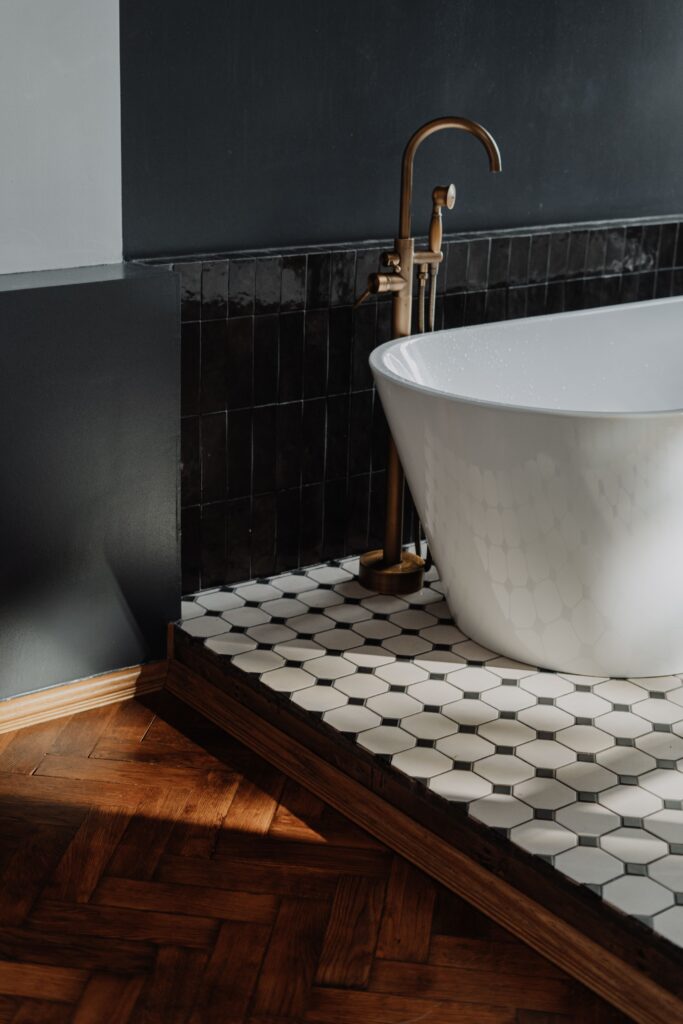
You can also use the floor to add a little character. Patterned tiles, darker shades or a herringbone-style finish can make quite a big difference, especially in a smaller bathroom where you don't need a huge amount of flooring.
A floor might look lovely on its own, but it still needs to work with everything else in the room. It helps to choose a design that works alongside your other finishes rather than leaving it until the end. Take a look at other aspects like vanity units, wall tiles, panels, lighting and paint colours.
Don't Forget The Practical Side
Bathrooms are naturally wet spaces, so water resistance has to be part of the decision.
Even in a fairly tidy household, you're going to get splashes from the bath or shower, wet towels and damp feet across the floor. If it's a busy family bathroom, it matters even more.
This doesn't mean you have to choose something plain or overly practical. It just means checking that the flooring you've fallen in love with is actually suitable for a bathroom. There are plenty of designs that mimic real wood or stone but are much easier to deal with day to day.
For Modern Bathrooms, Choose SPC Flooring.
If you like the look of wood or stone but want something easy to live with, SPC vinyl flooring is worth having. It's waterproof and comes in a range of finishes, so you can get the look of timber without worrying as much about moisture.
It's particularly useful if you want a warmer bathroom design, as traditional features like tiles can make a room feel colder, especially with lots of white or grey.
A wood-effect floor can also soften the look and make it feel more like the rest of the home. It's fairly straightforward to look after, which is always a bonus in a bathroom.
Tiles Are Still An Effective Choice
There's a reason tiles remain so popular in bathrooms. They're practical, easy to clean and there are almost endless designs available.
If you like a more classic bathroom, you could go for simple stone-look tiles or something with a subtle pattern. For a more contemporary design, larger tiles can help the room feel cleaner and less busy.
A patterned floor can work particularly well if the rest of the bathroom is quite simple. Pair it with plain walls, a simple vanity and a few softer accessories and the floor becomes the main feature.
The main thing to think about is grout. It can take a little more looking after, particularly with lighter colours, so it's worth considering how much maintenance you're happy with.
Think About How Your Floor Feels
It's easy to focus entirely on how bathroom flooring looks, but don't forget how it feels underfoot.
Tiles, in particular, can feel cold, especially in winter. However, if you're already planning underfloor heating, that might not be a problem at all. In fact, tiles and underfloor heating can work really well together.
If not, something like vinyl or SPC flooring can feel a little more comfortable. It's a small detail, but you'll notice it every morning when you step into the bathroom.
Be Careful When Using Real Wood
Real wood can look beautiful in a bathroom, especially if you're trying to create a more relaxed or natural style. The problem is that bathrooms aren't always the best environment for it.
Regular exposure to moisture can cause problems over time, so you need to be much more careful about the type of wood you use and how it's fitted.
For most homes, a wood-effect floor is probably the easier option. With it, you still get the warmth and texture, but without the worry every time the floor gets wet.
Using The Floor To Make A Small Bathroom Feel Bigger
If your bathroom is on the smaller side, the flooring can be used to help make it feel more spacious. Lighter shades usually work well, especially when they're paired with similar colours on the walls.
It can also help to keep the floor fairly simple, as small patterns or contrasting lines can sometimes make the room feel busier than needed.
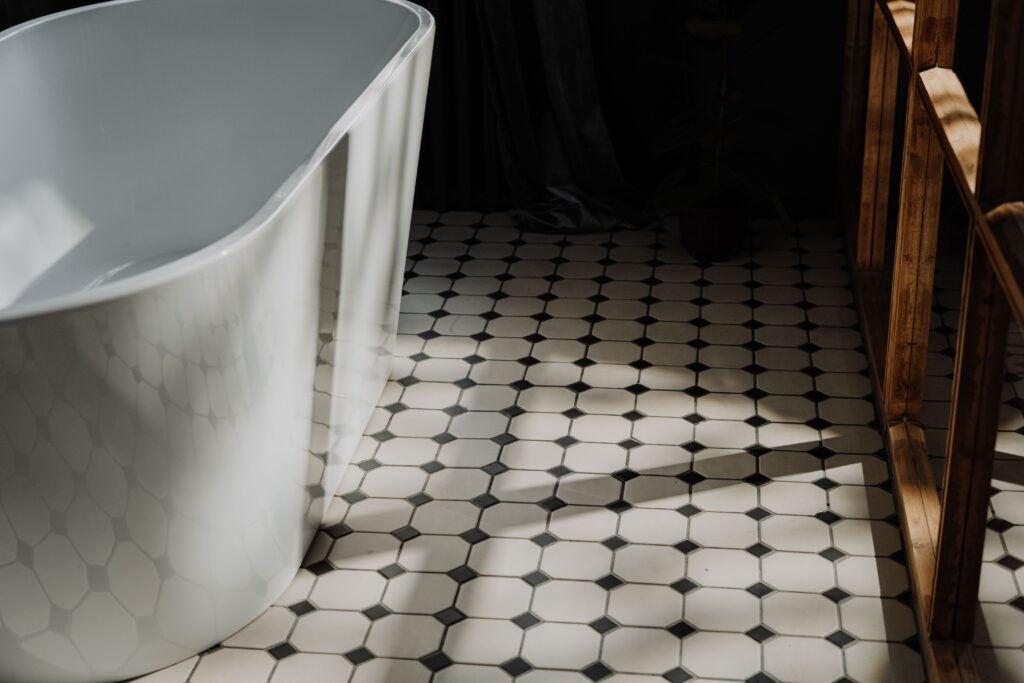
That said, small bathrooms are also a good place to take a few risks. A downstairs toilet or small en-suite can look great with a stronger pattern because there isn't much floor space to cover.
All in all, it really depends on the rest of the room. If you've already got a bold vanity, statement tiles or colourful walls, I'd probably keep the floor simple. If the rest of the bathroom is fairly neutral, the floor is an easy place to add interest.
Match The Flooring To Your Bathroom Furniture
One of the easiest ways to make a bathroom feel more considered is to make sure your finishes work together. You don't need everything to match exactly; in fact, it often looks better when it doesn't.
A warm wood-effect floor can sit nicely with a painted vanity in green, blue or off-white. A pale stone-effect floor can work with natural wood furniture. Darker flooring can also look really striking against a simple white bathroom suite.
Try to think in terms of tones rather than exact colours.
If the floor has warm undertones, use other warm finishes around the room.
If it's cooler, make sure it doesn't clash with the wall colour or furniture.
Samples are really useful here. Take them into the actual bathroom and look at them at different times of day. Something that looks beige in a showroom might look much greyer once it's in your home.
Consider How Easy It Will Be To Clean
Nobody wants a bathroom floor that looks lovely for five minutes and then becomes a nightmare to keep clean.
Pale floors can show hair and marks, whereas darker floors can show dust and water marks. That's where a mid-tone finish is often the easiest to live with.
Some heavily textured tiles look fantastic, but they can take a bit more effort to clean. Smooth flooring is generally easier, as long as it's still suitable for a wet area.
Don't Choose Based On Trends Alone
Bathroom trends come and go fairly quickly, though that doesn't mean you shouldn't take advantage of them. Flooring, however, is something you're probably going to have for quite a few years.
If you love a particular trend, think about whether you'd still like it if you changed the wall colour or bathroom furniture later on. Neutral wood, stone and simple patterned finishes tend to be easier to work with long term.
You can always bring in more fashionable colours through towels, mirrors, lighting and accessories, which are much easier to change.
What's The Best Flooring For A Bathroom?
A good bathroom floor shouldn't be something you have to think about once it's fitted. It should look and feel right as well as handle everything a bathroom throws at it.
Tiles are a great all-round option and work with almost any bathroom style. SPC flooring is ideal if you like the look of wood or stone and want something waterproof and easy to maintain.
Other vinyl options can also work well if you want something softer underfoot.
It all comes down to how you want the bathroom to look and how you use the space, so think about the whole room rather than just focusing on the floor. Look at colours, textures, furniture and lighting together, then make sure the flooring is practical enough for everyday life.