AD. Believe it or not, structure and style can work in unison, and in garden spaces, if you get these two right, the rest will take care of itself. After all, structure is what makes a garden look intentional rather than accidental, and the good news is that you do not need a complete redesign or a large budget.
Ways to Add Structure and Style to Your Garden
Start with the Ground Beneath You
Paths do much more than connect different areas, but show you where to look, when to slow down, and where things stop.
Our recommendation is a simple gravel path that is edged with reclaimed timber, or stepping stones laid across a lawn.
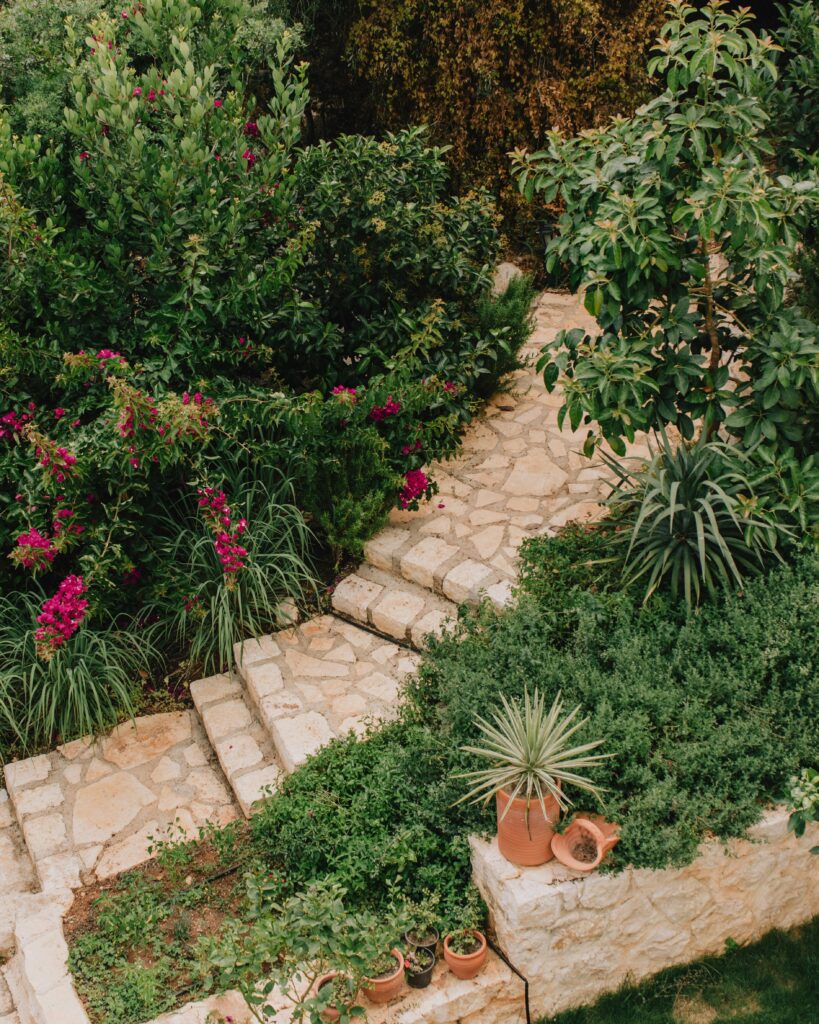
If you have an awkward corner or a slope you've been ignoring, this is the year to do something with it. Raised beds are an obvious answer, but don't overlook the quieter option: tiered planting using low retaining walls to create level changes. It adds depth without drama.
Walling: The Most Underused Tool in the Garden
There's a reason old kitchen gardens and formal European gardens have lasted centuries while trend-led planting schemes haven't. Walls. Low stone or brick walling gives a garden a sense of permanence that no amount of perennials can replicate on their own.
You don't need to enclose the whole space. A short run of dry-stone walling along the edge of a border, or a small raised bed built from natural stone, anchors a planting scheme visually and creates a warm microclimate that many plants genuinely love. It also does the quiet work of separating zones within a garden, giving different areas their own character without needing fences or hedging to do the job.
Gabion walls, filled with local stone or slate, have become more popular for good reason. They're relatively straightforward to install, they age well, and they feel rooted in the landscape rather than stuck on top of it.
Repetition Is Your Friend
One of the simplest ways to bring visual structure to a planting scheme is repetition. Pick two or three plants and use them consistently throughout the garden rather than collecting one of everything. Rounded clipped box balls, upright grasses, or a single species of lavender repeated along a border create a visual thread that makes the whole space feel much neater.
Topiary gets an unfair reputation for being fussy or formal. A few loosely clipped evergreen shapes dotted through a relaxed cottage planting is actually quite the opposite. It stops things from reading as chaos.
Vertical Thinking
Most people plant horizontally and forget the vertical plane exists. A simple obelisk or steel rod support for climbing roses or sweet peas gives the eye somewhere to travel upward. Tall structural plants like Verbena bonariensis, fennel, or ornamental grasses add height without blocking light, and their movement in the wind is something no hard structure can give you.
Wall shrubs are worth revisiting. A well-trained Ceanothus or espalier apple pressed against a warm wall looks architectural and earns its space all year.
The Edit Is Everything
The final piece of structure is restraint. A garden with fewer things done well is almost always more satisfying than one stuffed with ideas. Before adding anything new this season, spend time looking at what's already there. What's competing for attention? What could come out?
Structure isn't about making a garden stiff or formal. It's about giving it a shape that holds, something that works in February just as well as it does in July. Get that right and the planting, the colour, the seasonal change, all of it lands somewhere worth landing.