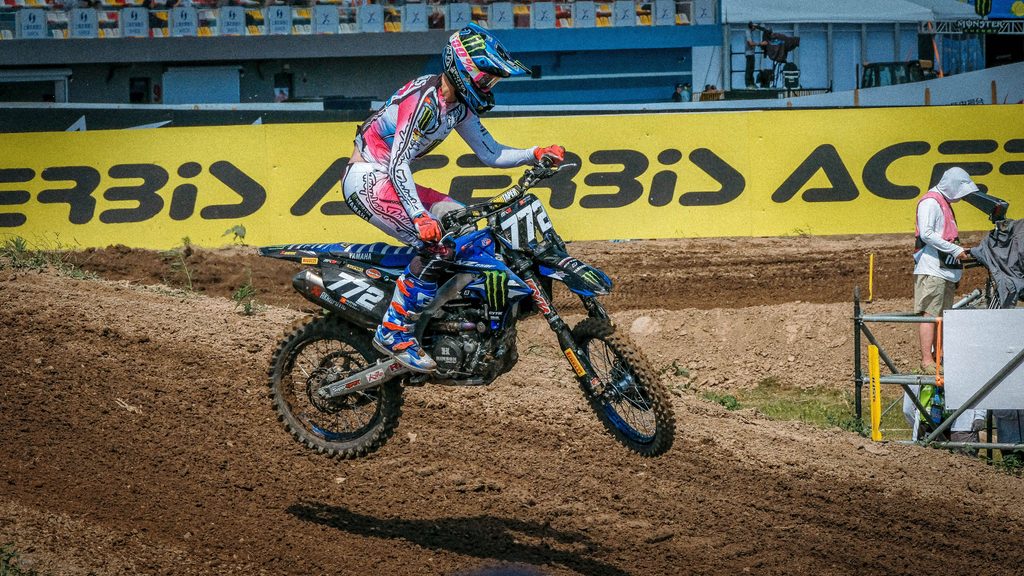
AD. A race-ready motocross bike looks different from an ordinary trail machine because every visible part suggests speed, control, and durability. The silhouette is narrow, lightweight, and aggressive, with a high front fender, compact bodywork, and a tall, flat seat. Long-travel suspension gives the bike a purposeful stance, while wide handlebars create a confident, competition-focused appearance. Minimal bodywork keeps the design clean and reduces unnecessary weight. Even when the engine is not running, the combination of sharp angles, exposed mechanical components, and knobby tires makes the motorcycle appear ready for the starting gate.
How To Make a Motocross Bike Look Race Ready
Bold Graphics And Number Plates
Graphics provide the strongest visual transformation. High-contrast motocross decals cover the shrouds, fenders, swingarm, and side panels, creating a coordinated race-team appearance. A professional-looking design usually combines two or three dominant colors with sharp lines, sponsor-style accents, and a clearly readable racing number. Matching graphics across the helmet, riding gear, and bike creates a unified presentation. Number plates should remain clean and visible rather than overloaded with small details. Crisp edges, smooth application, and properly aligned panels make the motorcycle look maintained, prepared, and ready for competition.
Suspension And Chassis Details
Suspension components strongly influence the race-ready look. Upside-down forks, anodized fork caps, polished fork tubes, and a sturdy rear shock linkage add visual purpose while supporting serious track performance. A race bike often has upgraded springs or adjusted damping to suit rider weight, terrain, and riding style. Motocross tracks include jumps, berms, whoops, and uneven landings, so the chassis must look capable of absorbing repeated impacts. The American Motorcyclist Association also emphasizes arriving with a clean, properly prepared bike, reinforcing the connection between appearance and mechanical readiness.
Performance-Focused Components
Several aftermarket parts immediately suggest racing intent. Oversized handlebars, reinforced handguards, grippy footpegs, a high-flow air filter, and an aftermarket exhaust all contribute to the competition aesthetic. A lightweight skid plate protects the engine without making the lower frame appear bulky. Disc-brake guards, radiator braces, and axle blocks add a technical, purposeful finish. The engine area should look clean, with neatly routed cables and secure fasteners. According to a current motocross overview, purpose-built machines commonly receive narrower gear ratios, stiffer suspension, and performance exhaust systems for demanding tracks.
Tires, Wheels, And Finishing Touches
Fresh knobby tires are among the clearest signs of preparation. The tread should look sharp, evenly worn, and suited to the track surface, whether that means soft sand, intermediate soil, or hard-packed dirt. Clean rims, properly tensioned spokes, and straight brake rotors support the same impression. Small details matter, too, including fresh grips, undamaged levers, lubricated controls, and a clean chain with correctly adjusted slack. Mud may be part of motocross, but race-ready presentation begins with a thorough wash and ends with careful inspection. A spotless machine makes every upgrade easier to notice.
The Complete Race-Team Look
Ultimately, a race-ready motocross bike combines performance cues with visual consistency. The stance should look balanced, the graphics should be sharp, and every component should appear functional rather than decorative. Coordinated gear, matching numbers, clean plastics, and carefully selected metal finishes turn an ordinary dirt bike into a convincing competition machine. The most effective builds avoid random accessories and focus on a clear theme. When appearance reflects thoughtful preparation, the bike communicates confidence before the engine starts, whether it is waiting in the paddock, entering practice, or lining up behind the gate.